A seemingly routine adjustment to President Donald Trump’s public schedule in early April 2026 ignited a firestorm of online speculation, with unverified claims of his hospitalization at Walter Reed National Military Medical Center spreading rapidly across social media platforms. While official statements quickly debunked the rumors, the episode exposed the challenges of containing misinformation in an era of instantaneous digital communication and heightened public scrutiny of political figures.
No evidence emerged to support assertions that the president had been admitted for a medical emergency. Instead, the episode appears rooted in a combination of a low-key weekend schedule, a standard White House “press lid,” and the public’s familiarity with Trump’s high-visibility style. The incident serves as a case study in how gaps in information—however brief—can fuel conspiracy theories and influence public perception.
The Spark: A Quiet Easter Weekend
The rumors gained momentum around April 4, 2026, following announcements that President Trump would forgo certain planned public appearances. For a president known for his energetic schedule and frequent media engagements, even a short period of reduced visibility stood out. White House officials had called a “press lid”—a routine notification indicating no further public events or photo opportunities for the remainder of the day—by late morning.
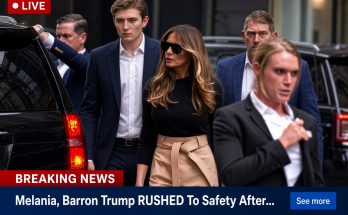
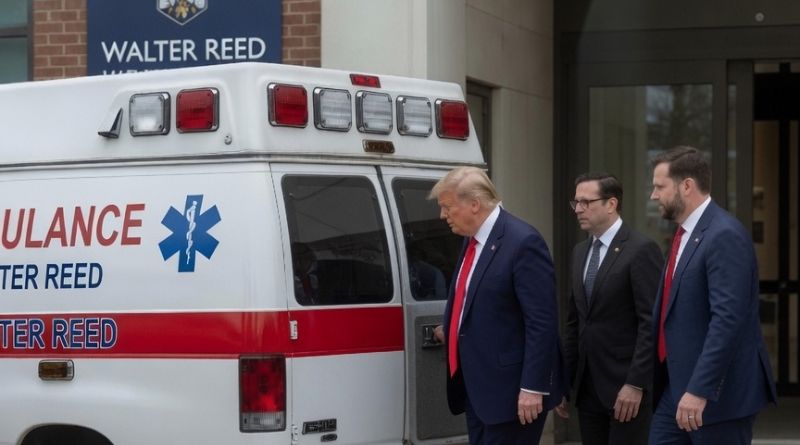
Social media users quickly took notice. Posts on X (formerly Twitter), Facebook, Threads, and Bluesky began circulating claims that Trump had been rushed to Walter Reed National Military Medical Center in Bethesda, Maryland, the facility long used for presidential medical care. Some accounts shared purported evidence, including old videos, AI-generated images, and reports of road closures near the hospital—elements later identified as unrelated or misinterpreted.
Engagement metrics underscored the speed of dissemination. According to monitoring tools cited in subsequent analyses, mentions of “Trump” and “Walter Reed” exceeded 100,000 across major platforms in the days surrounding the weekend. Collective interactions surpassed 1 million, demonstrating how algorithms favoring high-engagement content can amplify speculation before facts catch up.
One widely shared narrative suggested a serious health downturn linked to the president’s age—Trump was 79 at the time. Others tied it to broader geopolitical tensions, including U.S. involvement in matters related to Iran, positing that the administration was concealing an emergency to maintain stability. These claims evolved rapidly, with some users presenting them as confirmed reports despite the absence of sourcing from credible outlets or officials.
Official Response and Reassurances
White House officials moved swiftly to address the growing chatter. Communications Director Steven Cheung posted on X that President Trump had been “working nonstop in the White House and Oval Office” throughout the Easter weekend. “There has never been a President who has worked harder for the American people than President Trump,” Cheung wrote. “God Bless him.”
Other administration spokespeople echoed the message, dismissing the hospitalization rumors as “fake news” and “conspiracy theories.” A Marine sentry’s presence at the West Wing was cited as confirmation that the president remained on site. By April 6, Trump appeared publicly at the White House Easter Egg Roll, further countering the narrative.
In a formal statement, officials emphasized there had been no medical emergency. They noted that Trump continued executive duties, including work related to ongoing national security matters. Independent reporting, including pool coverage and photographs from the period, aligned with these accounts, showing no unusual activity at Walter Reed.
Context of Presidential Health Scrutiny
Public fascination with the health of U.S. presidents is hardly unprecedented. Throughout history, leaders from Woodrow Wilson to Franklin D. Roosevelt and more recent figures have faced questions about transparency regarding medical conditions. In Trump’s case, past disclosures have included treatment following an assassination attempt and routine physical examinations.
Earlier reports referenced a diagnosis of chronic venous insufficiency, a manageable circulatory condition common in older adults. Trump’s physician has periodically described him as being in good health overall, capable of fulfilling presidential duties. No official updates tied this or any new issue to the April schedule changes.
The timing of the rumors—over a holiday weekend with limited public events—amplified their reach. Trump’s decision to remain at the White House rather than travel to Mar-a-Lago, combined with a focus on international developments, contributed to the perception of something unusual, even as routine “executive time” filled parts of his schedule.
The Mechanics of Misinformation Spread
Social media’s role in the episode was pivotal. Algorithms designed to maximize user time on platforms naturally boost content that elicits strong emotional responses—fear, outrage, or curiosity. In this instance, posts evoking concern for the president’s well-being performed particularly well.
Fact-checkers later identified recycled footage from prior incidents, AI-generated visuals, and unverified local reports (such as temporary traffic adjustments) as fuel for the fire. Influencers and commentators across the political spectrum amplified the discussion, some urging caution while others leaned into speculation for clicks or engagement.
This pattern mirrors previous episodes involving public figures. Studies on digital misinformation consistently show that corrections often fail to reach the same audience as the original falsehoods—a phenomenon sometimes called the “continued influence effect.” Even after official denials, some users continued sharing the initial claims.
Established news organizations largely exercised restraint. Major outlets waited for corroboration before significant coverage, with many framing stories around the spread of rumors rather than endorsing them. This approach helped mitigate broader panic but did little to slow organic sharing in private groups and niche communities.
Public Reactions and Broader Implications
Responses from the public were mixed. Supporters of the president expressed frustration at what they viewed as politically motivated attacks, with some accusing opponents of wishing ill health upon Trump. Others, including political independents and critics, voiced genuine worry before the clarifications emerged. Fact-checking accounts and journalists played a key role in redirecting conversations toward verified information.
The incident raises larger questions about media literacy and institutional transparency. In an age where anyone with a smartphone can publish globally, distinguishing signal from noise has become more difficult. Health rumors about leaders carry particular weight, potentially affecting market confidence, international relations, or domestic policy debates.
Experts in communication and digital ethics note that public figures with outsized online presences—like Trump—face unique vulnerabilities. Their every move is parsed for meaning, and silence or routine adjustments can inadvertently create space for narratives to flourish. At the same time, overly opaque scheduling can exacerbate suspicions.
Broader societal trends compound the issue. Declining trust in traditional institutions, polarized political environments, and sophisticated tools like AI for content creation all contribute to an information ecosystem prone to distortion. Platforms have implemented measures such as labeling disputed content or reducing algorithmic amplification of unverified claims, but enforcement remains inconsistent and often reactive.
Lessons for the Information Age
Several takeaways emerge from the April 2026 episode:
First, the velocity of information flow demands proactive communication strategies from official sources. Prompt, transparent updates—perhaps including light documentation of the president’s activities during quiet periods—can reduce the oxygen available to rumors.
Second, individuals bear responsibility for their consumption habits. Cross-referencing multiple reputable sources, pausing before sharing, and supporting fact-checking initiatives represent practical steps toward healthier discourse.
Third, media organizations must balance the imperative for speed with the duty of accuracy. Responsible reporting, as demonstrated by many outlets in this case, builds long-term credibility even if it means forgoing immediate scoops.
Finally, the episode reinforces the need for ongoing societal investment in media literacy education. Teaching critical evaluation skills from an early age could equip future generations to navigate an increasingly complex digital landscape.
Current Status and Outlook
As of now, President Trump continues his regular schedule without reported interruptions related to health concerns. His administration has maintained a focus on domestic and international priorities, with no further indications of issues stemming from the Easter weekend speculation.
The rumors have largely faded from mainstream conversation, though they occasionally resurface in partisan corners of the internet. The episode joins a growing catalog of modern case studies illustrating both the democratizing power of social media and its potential pitfalls.
In the end, the brief wave of concern over President Trump’s health proved unfounded. Yet its rapid emergence and spread offer a timely reminder: In today’s connected world, information—verified or not—travels at the speed of light. Cultivating habits of skepticism, patience, and reliance on credible sources remains one of the most effective defenses against the chaos of unbridled speculation.