President Donald Trump on Sunday threatened to intensify U.S. military action against Iran’s energy infrastructure unless the regime quickly agreed to an acceptable peace deal, while also signaling that such an agreement appeared close.
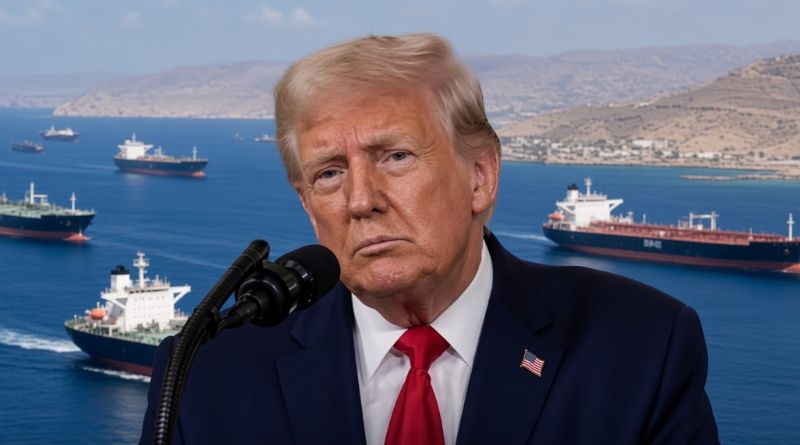
In a post on his Truth Social platform, Trump stated that the United States was engaged in “serious discussions with A NEW, AND MORE REASONABLE, REGIME to end our Military Operations in Iran.” He claimed substantial progress had already been achieved but warned of severe consequences if talks stalled. “If for any reason a deal is not shortly reached, which it probably will be, and if the Hormuz Strait is not immediately ‘Open for Business,’ we will conclude our lovely ‘stay’ in Iran by blowing up and completely obliterating all of their Electric Generating Plants, Oil Wells and Kharg Island (and possibly all desalinization plants!), which we have purposefully not yet ‘touched,’” he wrote. Trump described the potential strikes as retribution for American soldiers and others killed during what he called the old regime’s 47-year “Reign of Terror.”
The comments came amid ongoing U.S. military operations against Iran that began on February 28 with coordinated American and Israeli strikes. Those operations have killed several senior Iranian leaders and significantly degraded aspects of Tehran’s military capabilities. Secretary of State Marco Rubio said on Friday that the campaign was expected to wrap up within weeks rather than months, as key objectives were being met ahead of the original four-to-seven-week timeline projected by the administration. Speaking after meetings with G7 foreign ministers in France, Rubio told reporters, “It’s a question of weeks, not months.”
Rubio acknowledged that Washington had received messages from Iranian channels expressing openness to negotiations, though he noted uncertainty about the interlocutors. “We’ve had an exchange of messages and indications from the Iranian system, whatever’s left of it, about a willingness to talk about certain things,” he said. “We’re waiting for further clarification about who it is that we would be talking to, what we would be talking about, and when we will be talking.”
Special envoy Steve Witkoff expressed optimism that talks could begin soon, confirming that the administration had presented Iran with a 15-point proposal designed to end the conflict. “We have a 15-point deal on the table that the Iranians have had for a bit of time,” Witkoff said. “We expect an answer from them and it would solve it all.” Trump himself stated on Friday that he had paused a potential strike on Iranian power facilities to give negotiations room to advance. “Iran is being decimated,” he said, adding that talks were underway and that Tehran wanted a deal.
The United States has also moved additional forces into the region to expand available military options as events unfold. Iranian officials, meanwhile, have accused Israel of striking nuclear sites and major industrial facilities, including steel plants. Foreign Minister Abbas Araghchi cautioned that Tehran would exact a “heavy price” in response. The Islamic Revolutionary Guard Corps has threatened retaliatory attacks on infrastructure linked to the United States and Israel, saying it could hit industrial and energy assets across the broader region.
A central point of contention remains the Strait of Hormuz, a vital waterway through which roughly 20 percent of the world’s oil and liquefied natural gas normally flows. Iran has restricted navigation there, and G7 nations have jointly called for the full restoration of free passage. Rubio noted reports that Iranian authorities had begun charging certain vessels for safe transit, while Iranian lawmakers were said to be considering related legislation.
The combination of battlefield pressure, diplomatic messaging, and explicit threats against critical energy and water infrastructure has defined the current phase of the conflict. U.S. officials continue to insist that military aims are nearly complete and that a negotiated end remains preferable, yet they have left little doubt that further escalation against Iran’s power plants, oil facilities, and desalination systems remains on the table if progress collapses or the strait stays closed.