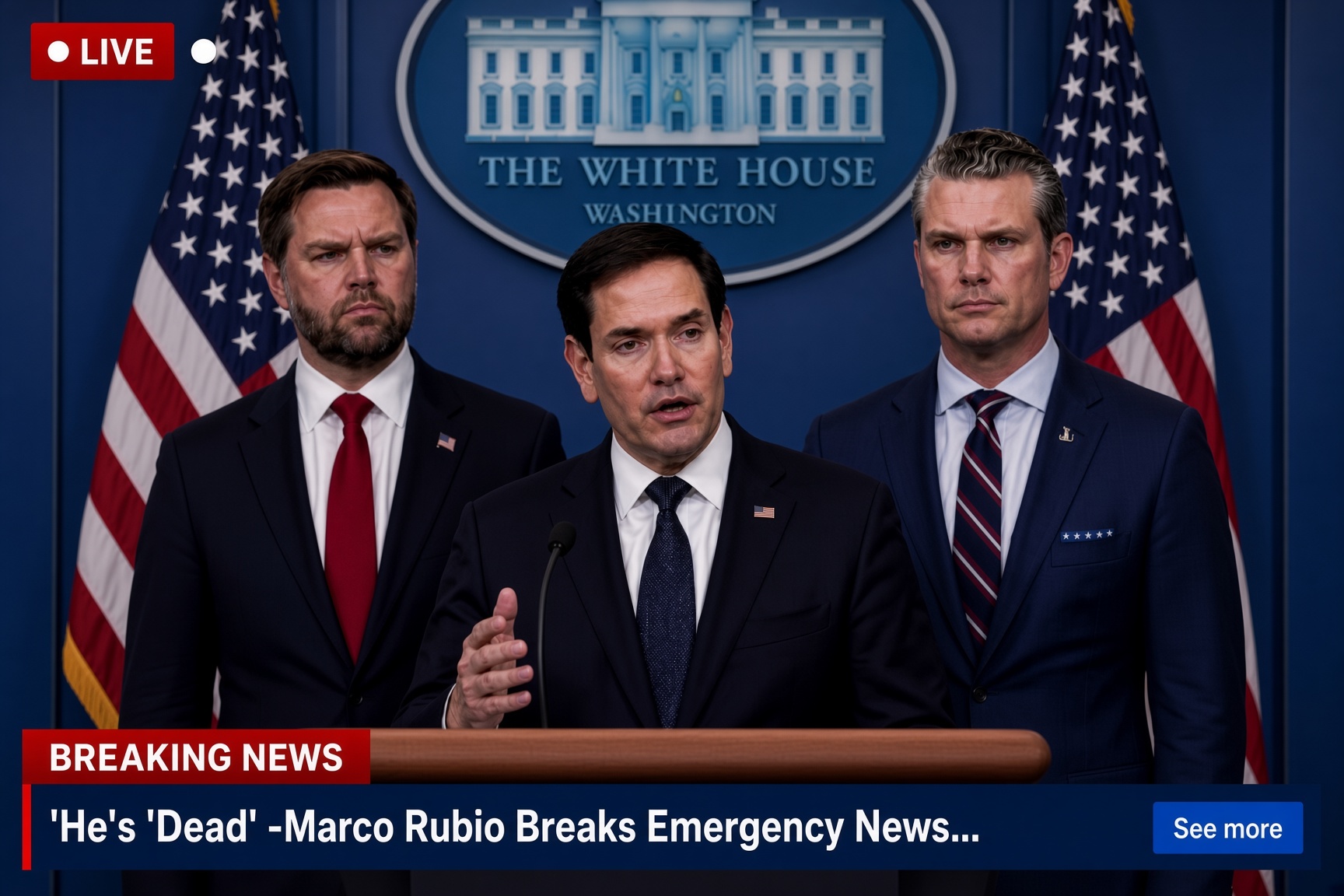
WASHINGTON — Secretary of State Marco Rubio has described an unusually tense stretch aboard Air Force One in which he and other senior officials spent about 90 minutes trying to decide whether a passenger sleeping in a conference room was simply exhausted or in the middle of a medical emergency.
Rubio told the story on the Katie Miller Podcast, appearing with his wife, Jeanette. He said the episode took place on a return flight from China. An unidentified person was lying on a couch in the aircraft’s conference room and appeared, at least from a distance, to be completely still.
Officials noticed the scene amid ordinary cabin activity: lights on, conversation, the constant noise of the plane. The person did not seem to react. Rubio said he could not clearly see the chest rise and fall and could not establish a consistent breathing pattern. Every so often there appeared to be a breath, but the pace looked so slow that he wondered how anyone could stay alive that way.
That left the group with an awkward choice. Waking the passenger risked embarrassment if the person was merely asleep. Doing nothing risked discovering a death on the presidential aircraft, a situation for which Rubio said he did not know the protocol. Calling a doctor raised the same problem: intervene too soon and look foolish; wait too long and face a far worse outcome.
“We spent about 90 minutes sort of debating should we make a move? Should I call the doc? Should we deal with this?” Rubio recalled. “Because it’s embarrassing if you wake them up. ‘Oh, I was just sleeping.’ But if they were dead, like what do you do? You have a dead body on the plane.”
He said he kept watching, in part so he would know where he had been if the situation turned out to be fatal. In the end, it did not. “Luckily, the person was fine,” he said. Rubio refused to name the passenger, and no independent account has identified the individual. Online speculation followed anyway, including jokes about well-known political figures. There is no public evidence supporting those guesses.
The anecdote drew extra notice because Rubio has already been asked, in a more political setting, about sleep on official duty. During a House Foreign Affairs Committee hearing, Rep. Ted Lieu pressed him on whether he had ever seen President Donald Trump fall asleep in a meeting. Rubio said he had not. He described Trump as keeping an unusually demanding schedule and often calling aides in the early morning.
Lieu then played video from a Cabinet meeting that he said showed Trump with his eyes closed while Rubio was speaking. Rubio maintained that he had never personally seen the president asleep and disputed the interpretation of the footage. The White House has separately said such clips show blinking or concentrated listening, not sleep. Critics have argued the images raise questions about stamina in high-stakes settings.
The Air Force One story, as Rubio told it, was less a political attack than a window into the strange logistics of life on the presidential plane: long flights, exhausted staff, and the sudden need to decide whether an unresponsive colleague is a joke waiting to happen or a crisis. For roughly an hour and a half, senior officials chose debate over immediate intervention. The passenger woke up. What they were left with was not an emergency, but an unusual story about how even routine travel at the highest level can tilt, briefly, into uncertainty.