Five Women Killed in Early-Morning Fire at Violanta Biscuit Plant Near Trikala
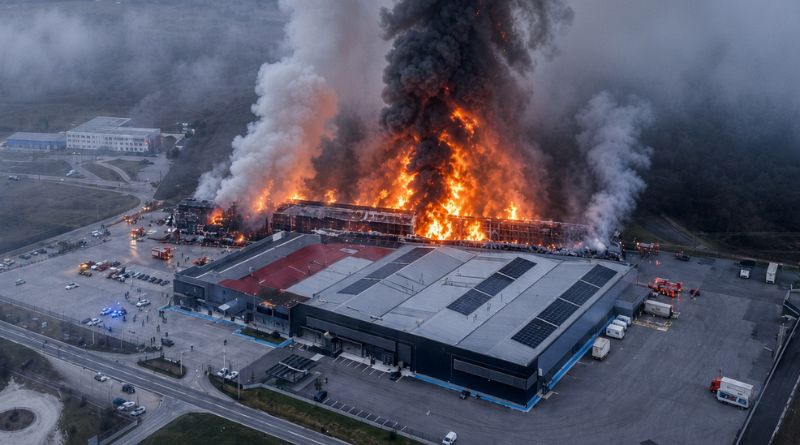
A devastating industrial fire at the Violanta biscuit factory near Trikala, in central Greece, killed five women working the overnight shift and sent several others, including a firefighter, to hospital. The blaze began shortly before 4:00 a.m. on Monday, January 26, 2026, after what witnesses described as a loud blast that was heard in the city and nearby villages. Greek authorities and emergency services confirmed the deaths after hours of search-and-recovery work in a production wing that had been badly damaged by fire and structural collapse.
The plant sits about 320 kilometers (200 miles) north of Athens and is a well-known local employer with national distribution of biscuits, cookies, and cereal bars. Thirteen people were on duty when the incident began. Eight escaped. Five women did not. Their bodies were recovered from wreckage after firefighters gained access to the most badly damaged sections of the building. Identification in some cases required DNA analysis because of the intensity of the fire.
Prime Minister Kyriakos Mitsotakis addressed the tragedy the same day, saying the country had begun “in the shadow of the tragic accident in Trikala” and offering condolences to the families. Local officials, labor groups, and residents in and around Trikala likewise described the loss as a blow to a community that knew the plant not only as a workplace but as part of the region’s everyday economy.
What happened at the factory
Emergency services were alerted after fire was detected inside the industrial complex. Early briefings, carried by Greek media and international agencies including Reuters and the Associated Press, said the fire followed a powerful sound consistent with an explosion and that part of the roof and walls gave way. Thick smoke drifted across the surrounding area. Flames ran along sections of the roof before crews brought the main fire under control.
The Hellenic Fire Service sent a large force to the scene—on the order of 40 to 50 firefighters, with more than a dozen fire engines and support vehicles, plus special rescue units and investigators from the Arson Crimes Division. Crews worked for hours to extinguish remaining hotspots, stabilize compromised structure, and search debris. Industrial sites complicate that work: machinery, stored ingredients, ventilation paths, and the risk of further collapse all slow rescue and recovery.
Of the 13 workers on the night shift, eight got out. Some were near exits or outside on a break when the blast occurred, a detail later cited by investigators as one reason the death toll was not higher. Five women remained unaccounted for until their remains were found in or near the production area, including, in later recoveries, close to one another in a lower section of the building.
Emergency care and the immediate aftermath
Seven people, including a firefighter, were taken to hospital in Trikala, mainly for smoke inhalation and related injuries. Health officials said none of those hospitalized was in immediate life-threatening condition. Authorities did not release detailed medical information, emphasizing treatment and support rather than public case-by-case updates.
Safety perimeters were established to keep the public away while search, recovery, and preliminary scene examination continued. For families waiting for news, the interval between the first confirmed recoveries and the location of the last missing worker was especially hard. Officials asked the public to rely on official briefings rather than unverified social-media claims, which spread quickly as images of smoke and a gutted plant circulated.
The company’s response
Violanta issued statements acknowledging the gravity of the night-shift fire and saying the cause was, at that stage, unknown. The company said it was cooperating with the Fire Department and other competent authorities, expressed condolences to the families of the dead, and described support for employees and relatives as its immediate priority. Later company comments, as legal proceedings developed, stressed limited public comment out of respect for the dead and cautioned against rumor while investigations continued.
No official finding as to origin was announced in the first hours and days covered by the earliest national reports. That caution matched the tone of fire officials, who separated confirmed facts—time, location, number of people on shift, number who escaped, number recovered—from speculation about ignition.
What investigators were examining
Greek officials were clear from the outset that the cause had not been finally determined. Witnesses spoke of a loud sound before flames; some early accounts said there were no gas cylinders in the immediate spot where fire was first seen. Investigators still had to decide whether any blast was the start of the event or a secondary effect of fire in an industrial space.
Typical lines of inquiry in such a case include electrical systems, ovens and other heat-generating equipment, fuel supply lines, maintenance records, surveillance footage, and compliance with fire-safety and workplace rules. Food plants also raise questions about combustible dusts such as flour under certain conditions, though authorities did not, in early briefings, confirm that dust was a factor here.
In the days after the fire, fire-service findings pointed toward gas used to fire industrial ovens—later described in official comments as a prolonged propane leak associated with underground piping, accumulation in a lower area, and ignition by an electrical spark. Workers told investigators they had noticed a gas odor over a period of time. Those later investigative conclusions, and subsequent arrests and court proceedings involving company figures on negligence-related charges, lie beyond the first official snapshot. At the moment the earliest reports were written, the public message from authorities remained: do not treat rumor as fact until the technical inquiry is complete.
Workplace safety and the wider context
Greece, as an EU member state, applies European workplace-safety directives that require fire-prevention systems, inspections, and emergency training. Food factories combine ovens, motors, packaging lines, and storage. Even modern plants can fail if detection, maintenance, or response does not match the hazard. After a fatal incident, labor inspectorates and fire investigators typically review whether standards were met and whether the sector needs tighter practice.
It was not publicly confirmed in the first official briefings whether the Violanta site had recently been inspected or whether earlier complaints had been logged. That information, if released, would come through the formal investigation, not through informal comment.
The fact that eight people escaped suggests that some routes and reactions worked. The deaths of five colleagues show how little margin there can be when fire and structural failure happen together in the middle of the night.
Trikala’s response
Industrial employers often sit at the center of local life. The women who died were night-shift workers; reporting later named several as mothers from nearby towns and villages who chose overnight hours so they could be with family by day. A company New Year cake-cutting the previous day made the timing of the loss still more painful for coworkers who had seen the same faces only hours before.
Municipal and regional officials offered condolences and began coordinating support. Labor organizations called for a thorough inquiry. Residents followed official updates and expressed thanks to crews who worked through smoke, heat, and unstable structure.
Support for families and what follows
In workplace fatalities, Greek labor and social-insurance rules generally provide for compensation and related support; counseling is often made available to coworkers and relatives. Specific arrangements are handled case by case and are not always announced in detail.
The next phase is forensic and technical: mapping damage, tracing fuel and electrical systems, reviewing records, and reconstructing the sequence from first ignition to collapse. Legal responsibility, if any, is for prosecutors and the courts. Safety authorities may also ask whether detection, piping integrity, or training should change across similar plants.
Until those processes finish, the confirmed picture remains human as much as technical: five women dead, others injured, a factory gutted, a city in mourning, and an investigation that began with a 4 a.m. alarm and will end only when cause and accountability are established in public, documented form.
The Trikala fire is a reminder that industrial risk is not abstract. Ovens, pipes, and night shifts are ordinary until they are not. Accurate reporting—casualty numbers, who responded, what officials will and will not yet say—matters while families bury their dead and while Greece waits for a complete account of why the plant burned.