The video opens on a ridge at first light. A column of armor sits hull-down below the crest, engines idling, while a pair of attack helicopters holds station over a valley that has not yet seen movement. Within a few minutes the picture widens: fighter aircraft on a combat air patrol, special-operations teams already inside a town, transport helicopters waiting on a pad just out of sight of the opposing force. Nothing in the sequence is a news report. It is a scenario built inside Arma 3, the long-running military simulation, and it has drawn attention from players and simulation hobbyists for the density of its combined-arms portrayal. The battle it shows is invented. The equipment, terrain logic, and coordination problems it stages are drawn from how modern forces are commonly understood to fight.
Arma 3 has been a workshop for this kind of production for years. Modders and mission makers use its editor, scripting tools, and community asset packs to stage operations that a conventional game campaign rarely attempts at this scale. The video in question uses that toolkit to stage a hypothetical clash between two major powers. Urban blocks, open country, and high ground all appear, and each setting changes what the units can do. A tank that dominates a field becomes a liability in a street. A helicopter that can insert a team on a ridge is exposed once air defenses come online. The creators treat geography as a constraint, not a backdrop.
Armored warfare carries much of the early action. Tanks advance by bounds, using folds in the ground and the edges of built-up areas rather than driving in the open. Infantry moves with them, clearing dead ground the vehicles cannot see into and marking targets the gunners would otherwise miss. The video spends time on the unglamorous parts of that relationship: a halt while a crossing is checked, a repositioning after an anti-tank team is suspected on a flank, a recovery when one vehicle is disabled and the others have to keep the lane open. Positioning, timing, and radio discipline are shown as the actual limits on the vehicles’ firepower. A well-placed tank section can fix an opposing force; the same section, committed without infantry or without a plan for what happens after the first engagement, stalls.
Air power is treated as a condition the ground fight depends on, not as a separate spectacle. Fighter aircraft conduct strikes against air defenses and against armor caught in the open, then return to a patrol pattern rather than lingering. The sequences underline a standard point in air-land doctrine: control of the air does not win the ground fight by itself, but the absence of it makes almost every ground movement more expensive. Visual effects are polished, yet the tactical point is narrower. Strike aircraft appear when a forward observer or an unmanned sensor has a target, and they leave once the window closes. That economy of presence is closer to how air support is actually allocated than to the continuous overhead cover common in action films.
Helicopters occupy the space between those two layers. Attack helicopters work the edges of the armored fight, engaging vehicles and strongpoints that the tanks cannot yet reach, and they are shown breaking off when the air-defense threat rises. Transport helicopters insert and extract small units on short notice, including moves that would take hours by road. The dual role is the point the video keeps returning to. Rotary-wing aircraft can move people and fire quickly, and they can also be removed from the fight quickly if the other side has the sensors and the missiles to contest them. Several sequences turn on that trade-off: an insertion that succeeds because the route was masked by terrain, and a later extraction that is delayed because the landing zone is no longer clean.
Special operations forces are woven through the larger action rather than presented as a separate story. Small teams are shown marking targets, watching avenues the main force intends to use, and striking command or air-defense nodes that would otherwise slow the conventional units. Their missions are short, tightly bounded, and dependent on the timing of the larger plan. When the conventional attack slips, the teams’ windows slip with it. That interdependence is one of the clearer strategic notes in the video. Elite units do not replace mass; they create conditions in which mass can move.
The larger design choice is combined arms in the plain sense: ground, aviation, fires, and reconnaissance arranged so that each covers a weakness of the others. The video does not lecture on doctrine. It shows the same objective attempted with and without that integration. An armored push without air cover meets prepared defenses. An airstrike without a ground force ready to occupy the target area changes the picture for a few minutes and then fades. A special-operations raid conducted without a conventional follow-on becomes an isolated action. Viewers watching for entertainment still receive a workable sketch of why modern staffs treat domains as a single problem.
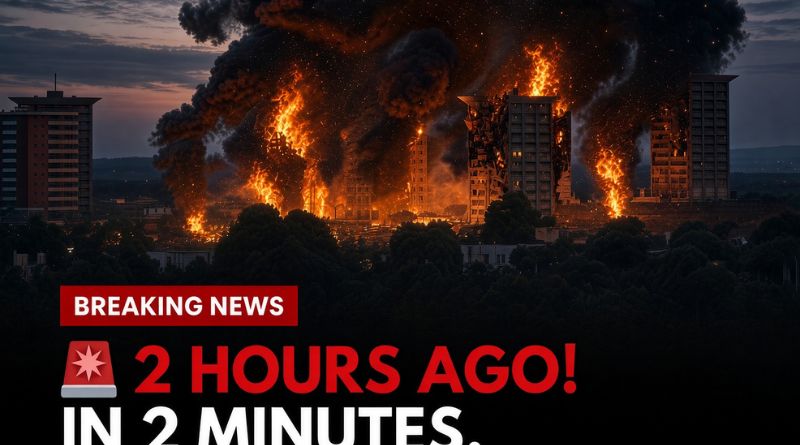
Presentation is doing a share of the work. Camera placement, sound, and editing are closer to a short film than to a raw mission recording. Explosions, rotor noise, and vehicle movement are mixed so that the geography of a shot remains readable. The creators use wide views to establish where forces sit relative to one another, then cut to tighter angles for the decisions that matter: a vehicle commander choosing a hull-down position, a pilot aborting a run, a team leader holding at a corner. The cinematic layer makes the video travel beyond the usual Arma audience. It also creates the risk the creators try to close with an on-screen disclaimer. The detail is high enough that a viewer skimming past the opening could mistake the scenario for footage of a real operation. The video states, early and plainly, that the conflict is fictional and not a depiction of any current event.
That disclaimer is not a formality. Simulation communities have spent years arguing about where realism ends and implication begins. Equipment models, unit markings, and terrain can be close enough to real forces that a clip circulates without its context. The producers of this video keep the framing hypothetical: two invented orders of battle, a constructed map, and outcomes driven by the scenario rather than by a claim about any actual military. Ethical presentation here is mostly a matter of labeling and of emphasis. The video spends its time on coordination, terrain, and the limits of each arm. It does not treat real political disputes as the subject, and it does not present the scenario as a forecast.
There is a secondary audience that watches for the staff problems rather than for the set pieces. Deployment order, the use of reconnaissance before commitment, the cost of moving without air defense suppression, the difference between a raid and an occupation: these are visible if the viewer is looking for them. None of it is a substitute for professional military education. It is closer to an illustrated case, useful to people who already study tactics and interesting to people who do not. Arma’s flexibility is what makes the case possible. The platform lets a small team script opposing forces, civilian patterns, and failure conditions that a linear campaign would not bother to model. Community mods supply much of the equipment detail. The video is one product of that shared toolchain, and the comment threads around it have followed the usual pattern: critiques of spacing, arguments about which air-defense system would have ended a given helicopter run, and alternative plans for the same objectives.
The technical floor under all of this is the game engine and the years of community work on top of it. Modern rendering can carry large numbers of units, detailed vehicles, and lighting that sells a time of day. Scripting can force a sequence to branch when a unit is lost or when a player action misses a timing. Those tools do not create judgment. They let creators stage judgment in a form other people can watch. As engines and mods improve, the ceiling on this kind of video rises, mostly in the direction of denser electronic warfare, more cluttered civilian environments, and logistics that actually run out. The present video is already busy enough that those next layers would change the decisions on screen, not merely the texture quality.
Teamwork is the recurring operational theme, and it is shown at the level of roles rather than speeches. Armor without infantry stalls. Aviation without targeting data wastes sorties. Special operations without a main effort to exploit their work spends people for limited effect. Radios, timelines, and abort criteria appear often enough that the battle reads as a plan under stress, not as a parade of assets. The narrative structure supports that reading. The video moves from deployment to contact to a larger engagement, with earlier choices still visible in later frames. A crossing left unsecured in the first act constrains the armor in the second. An air-defense site left intact forces the helicopters onto worse routes. Isolated clips would still look impressive. The through-line is what makes the tactics legible.
Variety of setting does similar work. Street fighting compresses fields of fire and multiplies ambush positions. Open ground rewards sensors and long-range weapons, and punishes anything that moves without concealment. High ground gives observation and, once held, complicates every approach beneath it. The same units behave differently in each, which is the simplest demonstration the video offers of why a single template fails. Equipment detail reinforces the point without pretending the scenario is a documentary. Vehicles and weapons resemble real counterparts closely enough to support the tactics on display. Procedures are simplified for the camera. The balance is deliberate: believable enough to carry the problem, invented enough that it should not be cited as evidence of any real operation.
Strategic choice is staged rather than narrated. Commit the reserve early and the flank thins. Wait for fuller air defense suppression and the ground force spends longer under indirect fire. Send the special-operations team against the harder target and the conventional attack may gain a cleaner corridor, at the cost of a team that cannot be reused. Viewers do not receive a solved battle. They receive a sequence in which those trade-offs are visible. That is the educational residue once the explosions are set aside: modern operations are coordination problems with expensive failure modes, and fiction is a safe place to watch the failure modes play out.
Interest in this kind of production has tracked the broader taste for simulation over pure power fantasy. Arma 3 remains a common stage because it is moddable, because its community already shares missions and asset packs, and because a small group can produce something that looks, at a glance, like a much larger studio piece. This video is a clear instance. It is also a reminder of the labeling problem that travels with the form. High production values increase both the audience and the chance of misreading. The responsible version of the genre keeps the fiction in frame, uses real-world detail as a vocabulary rather than as a claim, and lets the strategic content do the work that spectacle alone cannot.
Taken on those terms, the piece is a capable example of what a military-simulation platform can carry when creators treat tactics as the subject and cinema as the delivery. Tanks, fighters, helicopters, and special-operations teams are present in force. The more durable impression is how they constrain one another, how terrain rewrites their options, and how a plan frays once contact begins. None of it happened. All of it is available to watch as a constructed case in coordination, which is the use the video itself asks of its audience.