The Mexico–Querétaro Highway, one of Mexico’s most vital commercial and commuter corridors, became the site of a devastating multi-vehicle collision near Huehuetoca at the Jorobas intersection. The chain-reaction crash, involving private cars and heavy freight trucks, claimed lives, injured others, and paralyzed traffic for hours.
What began as an ordinary day for thousands of drivers moving goods and people between Mexico City and industrial centers in the Bajío region ended in twisted metal, emergency sirens, and long lines of stranded vehicles stretching for kilometers. The incident underscored how quickly conditions on a high-volume highway can turn catastrophic when speed, vehicle condition, traffic patterns, and environmental factors converge.
A Critical Artery Under Strain
The Mexico–Querétaro Highway is far more than a stretch of asphalt. It forms a backbone of the country’s logistics network, carrying freight that supports manufacturing, agriculture, and commerce while also serving daily commuters between the capital and cities to the north. Its economic importance means that any major disruption ripples outward—delaying deliveries, stranding workers, and complicating emergency access.
On the day of the crash, traffic volume was typical for this heavily used route. Near the municipality of Huehuetoca, at the Jorobas intersection—an area long known among regular drivers for its complex merges, frequent congestion, and elevated risk—the sequence of events unfolded with sudden force. Multiple vehicles collided in a chain reaction. Wreckage scattered across lanes as private cars and heavy trucks came to rest at violent angles. The sound of impact gave way to alarms, horns, and urgent calls for help. Within minutes, a routine stretch of highway had become an emergency scene.
Witnesses described a rapid, overwhelming progression: vehicles that had been traveling at highway speeds suddenly locked together or were forced off course. The presence of heavy freight trucks amplified the scale of the damage, their mass and momentum turning what might have been a contained collision into widespread destruction across multiple lanes.
Emergency Response Under Pressure
Emergency services mobilized quickly. Paramedics, firefighters, civil protection units, and highway patrol converged on the site. Their coordinated arrival was essential, yet the conditions on the ground presented immediate challenges. Several people were trapped inside damaged vehicles, requiring specialized extraction tools and careful work amid unstable wreckage and debris.
On-site triage areas were established so that medical teams could assess injuries and prioritize care. Some victims needed immediate life-saving intervention at the scene; others were stabilized and transported to nearby hospitals that had begun preparing for a surge in arrivals. Ambulances shuttled continuously between the crash site and medical facilities. The speed of this response reflected both the seriousness of the incident and the preparedness of regional emergency systems, though the complexity of the scene meant that rescue work continued under significant pressure for an extended period.
At the same time, authorities confronted the traffic crisis that rapidly developed in both directions. Long queues formed as vehicles backed up for kilometers. Security forces implemented detours, redirected traffic, and controlled access to the scene to protect responders and stranded motorists. Heavy equipment was brought in to clear debris and remove damaged vehicles, but the extent of the wreckage made the process slow and methodical. Partial reopening of lanes required careful coordination to avoid further incidents while crews worked.
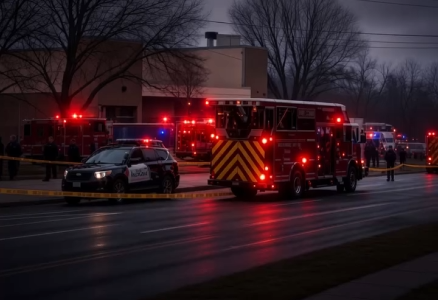
The visual scene—flashing lights, scattered wreckage, and uniformed personnel—created a somber atmosphere for those waiting nearby or passing through the area. For many drivers, a routine journey became hours of uncertainty.
Investigating a Complex Sequence of Events
As immediate rescue and clearance operations progressed, attention turned to determining what caused the crash. Investigators began a methodical examination of multiple possible factors. Early indications pointed toward excessive speed as a potential contributor. On a high-speed corridor, even brief lapses in judgment or following distance can produce severe consequences, particularly when heavy vehicles are involved.
Environmental conditions were also under review. Reports suggested that visibility may have been reduced at the time of the incident, whether due to atmospheric factors, lighting, or other conditions that limit reaction time. Reduced visibility complicates a driver’s ability to anticipate hazards and adjust speed or lane position.
A further focus of the inquiry concerned the mechanical condition of the vehicles, especially the heavy freight trucks. Authorities examined maintenance records, braking systems, tires, and other components to determine whether technical failures played a role. Reconstructing the precise sequence of events involves collecting physical evidence, analyzing vehicle data where available, gathering witness statements, and reviewing traffic and weather conditions. The process is detailed and deliberate; its findings will help establish accountability and may identify broader patterns that warrant attention.
The Human Cost Beyond the Scene
While technical and logistical aspects of the response dominate early reporting, the human consequences remain central. Each fatality represents a family confronting sudden loss, altered plans, and the search for answers. Survivors face physical recovery alongside the emotional effects of the trauma. For those who lost loved ones or were seriously injured, the aftermath extends far beyond the highway itself—into hospitals, homes, and communities.
Support from medical professionals, family, and community networks becomes essential during recovery. Understanding the circumstances of the crash can form part of the process of coping, even as it cannot reverse the outcome. Incidents of this scale also affect first responders and bystanders who witness the immediate aftermath, adding layers to the overall impact.
This dimension transforms an accident from a traffic report into a lasting event for those directly involved. It also reinforces why prevention efforts matter: the goal is not only to respond effectively when collisions occur but to reduce their frequency and severity.
Renewed Attention to Highway Safety
In the wake of the crash, discussions about road safety on major corridors such as the Mexico–Querétaro Highway have gained renewed focus. Experts and advocates have highlighted several recurring concerns. One is the enforcement of speed limits, particularly for large commercial vehicles whose size and weight increase the consequences of any loss of control. Consistent monitoring and meaningful penalties can encourage compliance.
Regular mechanical inspections of freight trucks and other commercial vehicles represent another priority. Ensuring that brakes, tires, and other critical systems are in proper condition reduces the likelihood of technical failures contributing to collisions. High-risk locations such as the Jorobas intersection have drawn attention as candidates for infrastructure improvements, including better lighting, clearer signage, improved traffic management systems, and design changes that reduce conflict points.
Broader systemic issues also surface in these discussions. Growing traffic volumes place increasing demands on existing infrastructure. Modernizing highways with intelligent traffic systems, enhanced monitoring, and design features that improve visibility and flow can help create safer conditions over time. Such changes require coordination among government agencies, private operators, and other stakeholders.
Shared Responsibility on the Road
Systemic improvements are important, yet individual decisions remain a constant factor in highway safety. Maintaining appropriate speeds, preserving following distance, remaining alert, and adapting to changing conditions—whether weather, congestion, or visibility—can meaningfully reduce risk. Even experienced drivers must stay cautious on busy corridors where circumstances can shift rapidly.
Driving involves continuous judgment. Recognizing that each vehicle’s actions affect others on the road encourages more careful behavior. Education, awareness campaigns, and consistent enforcement work together with infrastructure and vehicle standards to shape overall outcomes.
Moving Forward While Remembering
Cleanup and traffic restoration eventually return the highway to its normal function as a critical link. The physical signs of the collision fade, but the effects on those involved do not. For families and survivors, the event remains a point of loss and recovery. For the wider public, it serves as a reminder of the vulnerabilities that exist even on essential infrastructure.
Accidents of this kind are not isolated; they form part of patterns that merit sustained attention. Learning from specific incidents—through thorough investigation, transparent reporting, and targeted improvements—can inform measures that reduce the chance of recurrence. Progress occurs through incremental steps: stronger enforcement, better vehicle maintenance standards, targeted infrastructure upgrades, and continued emphasis on responsible driving.
The Mexico–Querétaro Highway will continue to carry the volume of people and goods that makes it economically indispensable. The challenge is to ensure that its role as a vital artery does not come at an unacceptable cost in lives and injuries. The recent collision near Huehuetoca illustrates both the fragility of high-volume corridors under pressure and the importance of coordinated efforts—by authorities, operators, and individual drivers—to protect those who rely on them every day.