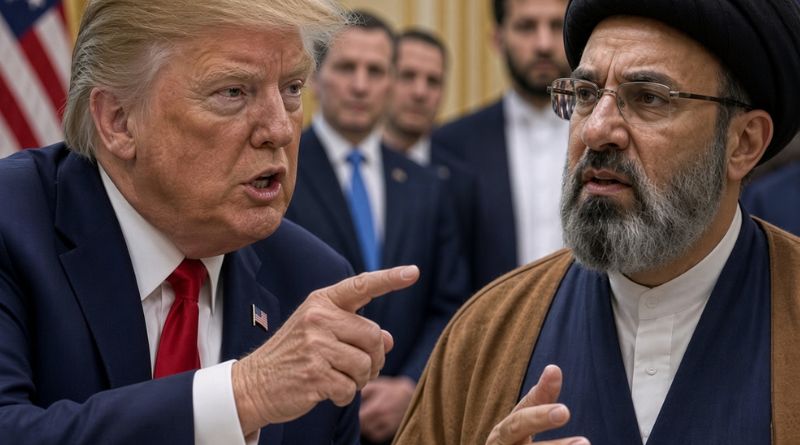
President Donald Trump, Vice President JD Vance, Secretary of State Marco Rubio, and other senior administration officials are finalizing details of a potential agreement to end the war in Iran. The talks come as U.S. forces conducted limited self-defense strikes in southern Iran on Monday while Iranian negotiators met in Qatar.
Speaking during a visit to India, Rubio reiterated that the Strait of Hormuz must be reopened. “The straits have to be open, they’re going to be open,” he said. “What’s happening there is unlawful, it’s illegal, it’s unsustainable for the world, it’s unacceptable.” He noted that discussions were underway in Qatar and that negotiators were still refining specific language in an initial document. “It’ll take a few days,” Rubio said. “The president expressed his desire to make it. He’s either going to make a good deal or no deal.”
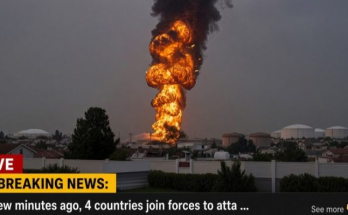
The Monday strikes, described by U.S. Central Command as self-defense actions “to protect our troops from threats posed by Iranian forces,” targeted missile launch sites and Iranian boats attempting to place mines. Capt. Tim Hawkins, a Central Command spokesperson, said the command continues to defend U.S. forces “while using restraint during the ongoing cease-fire.” He declined to specify which ships came under fire or the exact locations of the strikes.
A senior U.S. military official said some of the dozens of American warplanes and nearly two dozen Navy warships—including two aircraft carriers and their escorts—enforcing a blockade against vessels entering or leaving Iranian ports in or near the Gulf of Oman and Arabian Sea had been threatened by Iranian surface-to-air missiles. The strikes occurred near the Iranian port and navy base at Bandar Abbas. American and Iranian forces have clashed in other ways since a cease-fire took effect roughly six weeks ago. The latest strikes coincided with Iranian officials gathering in Qatar for negotiations on ending the conflict.
Iran’s foreign ministry said Monday that Tehran and Washington have reached understandings on many issues under discussion, though a final deal is not imminent. “It is correct to say that we have reached a conclusion on a large portion of the issues under discussion,” foreign ministry spokesman Esmaeil Baqaei said at a weekly briefing. “But to say that this means the signing of an agreement is imminent—no one can make such a claim.” He accused Washington of shifting its positions.
Trump has said any deal he reaches with Iran will be “good and proper,” while criticizing the Obama administration for providing Iran with “massive amounts of CASH, and a clear and open path to a Nuclear Weapon.” A top administration official said Sunday that the Iranians have agreed to a framework that would include eliminating highly enriched uranium, though work continues on the final terms.
Under the emerging deal, Iran would reopen the Strait of Hormuz in exchange for the United States lifting its blockade of the waterway. The U.S. would also ease sanctions if Iran reduces its nuclear enrichment. The official said most parties agree on the basic outlines and that the Trump administration is satisfied with progress so far, even as details remain to be settled. Iran appears more willing to negotiate now than before recent military operations, the official added.
The administration is seeking a firm commitment against enrichment. Officials say the length of any such pledge—whether 20 or 30 years—matters less than how it would be enforced. They believe the prospective agreement would go further than the 2015 nuclear deal reached under the Obama administration, which permitted limited enrichment up to a defined threshold.
Negotiations are expected to continue over the coming days as both sides work through remaining differences on language and verification. Rubio’s comments and the simultaneous military activity underscore the dual tracks of diplomacy and force that have characterized recent weeks, with the United States insisting the Strait of Hormuz cannot remain closed while Iran signals that core understandings are in place even as a signed agreement is not yet assured.