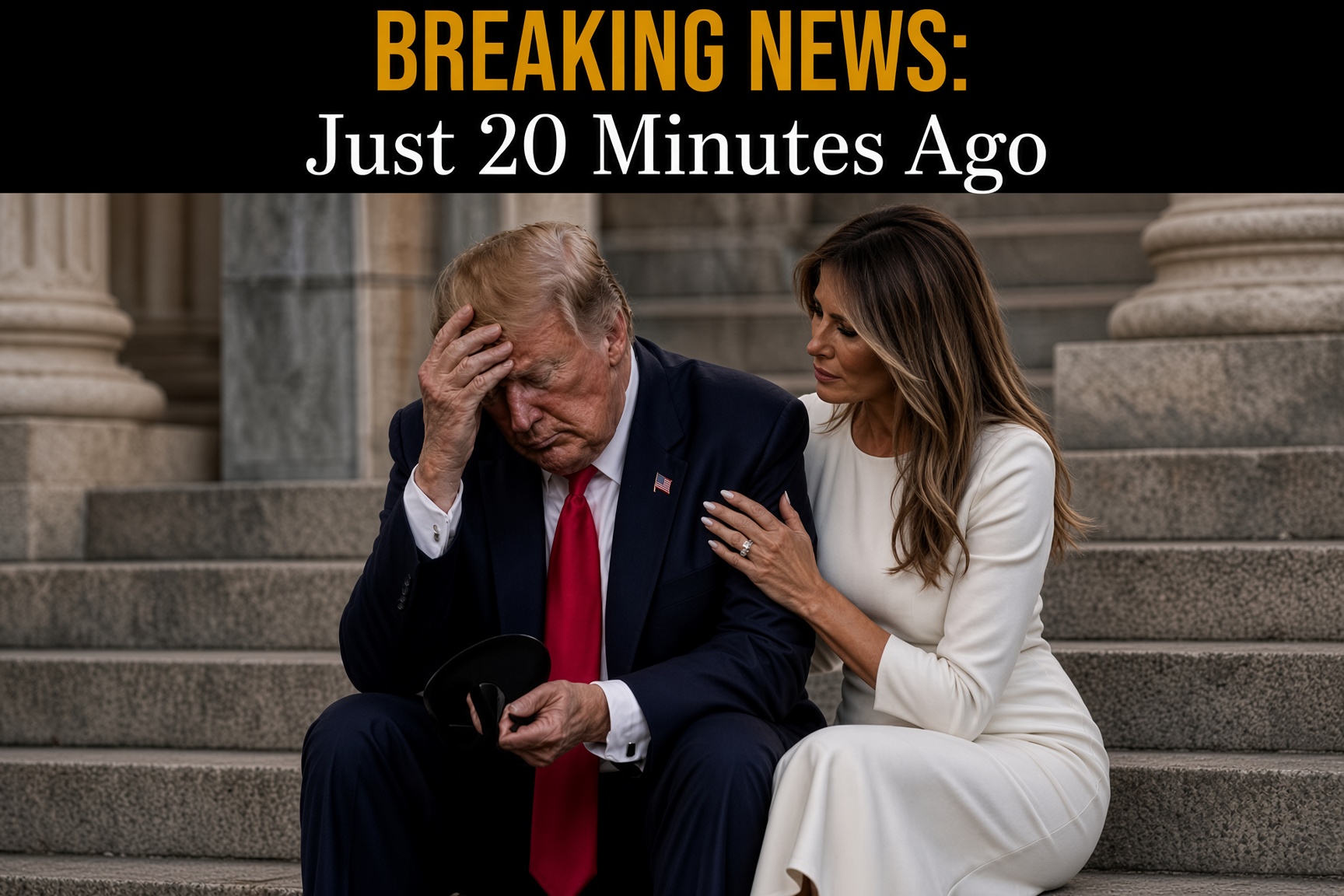
In a city defined by the steady pulse of motorcades and the sharp edges of hallway ambushes, Washington slipped into an uncharacteristic quiet for half an hour on Thursday. The stillness offered a rare, unfiltered view of Donald Trump confronting the weight of what he has already set in motion. None of the familiar machinery of his political style was present. There were no amplified playlists, no crowds holding placards at an angle for the cameras, and no rapid-fire exchanges delivered from behind a protective barrier. What witnesses saw instead was a solitary figure against the plain institutional walls of the capital, stripped of the continuous performance that has defined his public life for a decade. The interval was neither a concession nor an apology. It registered more as an encounter with compressed time: years of high-speed political combat briefly interrupted by the slower, more permanent claims of the historical record.
From the moment he first appeared on the national stage in 2015, Trump’s approach has depended on constant forward motion. Dominate the day’s news, escalate every clash, and treat any pause as a vulnerability. That pace carried him through two impeachments, multiple criminal cases, the events of January 6, and an improbable return to the presidency. Yet once separated from the protective volume of large crowds and the instant responses of social media, the protective layers thinned. In the quiet corridor, he did not appear as the figure remaking a party through rallies or as the executive issuing directives in real time. He was a 79-year-old former and current president facing an institutional fact that no amount of momentum can fully outrun: the power to set the national agenda is temporary, while the consequences recorded in statutes, judicial appointments, and diplomatic arrangements are not.
Observers long familiar with executive power noted that the significance of the half-hour lay in the absence of insulation. Choices once made as tactical moves intended to survive a single news cycle have settled into lasting legal precedents, reshaped appellate courts, and altered patterns of international alignment. The next headline no longer arrives quickly enough to blur those boundaries. What remains are the fixed constraints of constitutional process and the independent operation of institutions that continue regardless of who occupies the White House.
The silence itself sat outside the usual partisan sorting. In an environment built for short clips and overnight fundraising appeals, an extended quiet period resists ready interpretation. It supplies no ready sound bite for cable panels and no immediate material for appeals. The expected readings still appear: supporters tend to describe the reserve as composure under pressure, the stance of a leader who has already altered the terms of national debate. Critics more often read it as evidence of strain, the cumulative effect of legal constraints and narrowing room for maneuver. Both reactions follow familiar lines. Beneath them lies a structural feature of the modern presidency. No one leaves the office without the apparatus of the state having imposed its own requirements. Influence spreads through a changed judiciary, revised trade rules, and shifts in civic expectations, while the day-to-day machinery of government continues on its own schedule, largely indifferent to the personal style of the occupant.
By early afternoon the ordinary rhythms returned. Intersections cleared for official vehicles, correspondents resumed their stand-ups, and the regular flow of appointments and statements resumed. No formal acknowledgment of the quiet interval was issued, and no camera recorded a frame that dominated the evening broadcasts. The moment nonetheless marked a visible point in the longer arc. Historical assessment seldom arrives as a single dramatic turn. It more often accumulates in the unplanned pauses where performance gives way to the settled effects of decisions already taken. For Trump, the enduring measure will not be the volume of outdoor events or the reach of online posts, but the durability of the courts, alliances, and governing structures shaped during his time in office. In the center of the capital, the brief silence was not simply the lack of an event. It was the sound of accumulated consequences asserting their own presence.