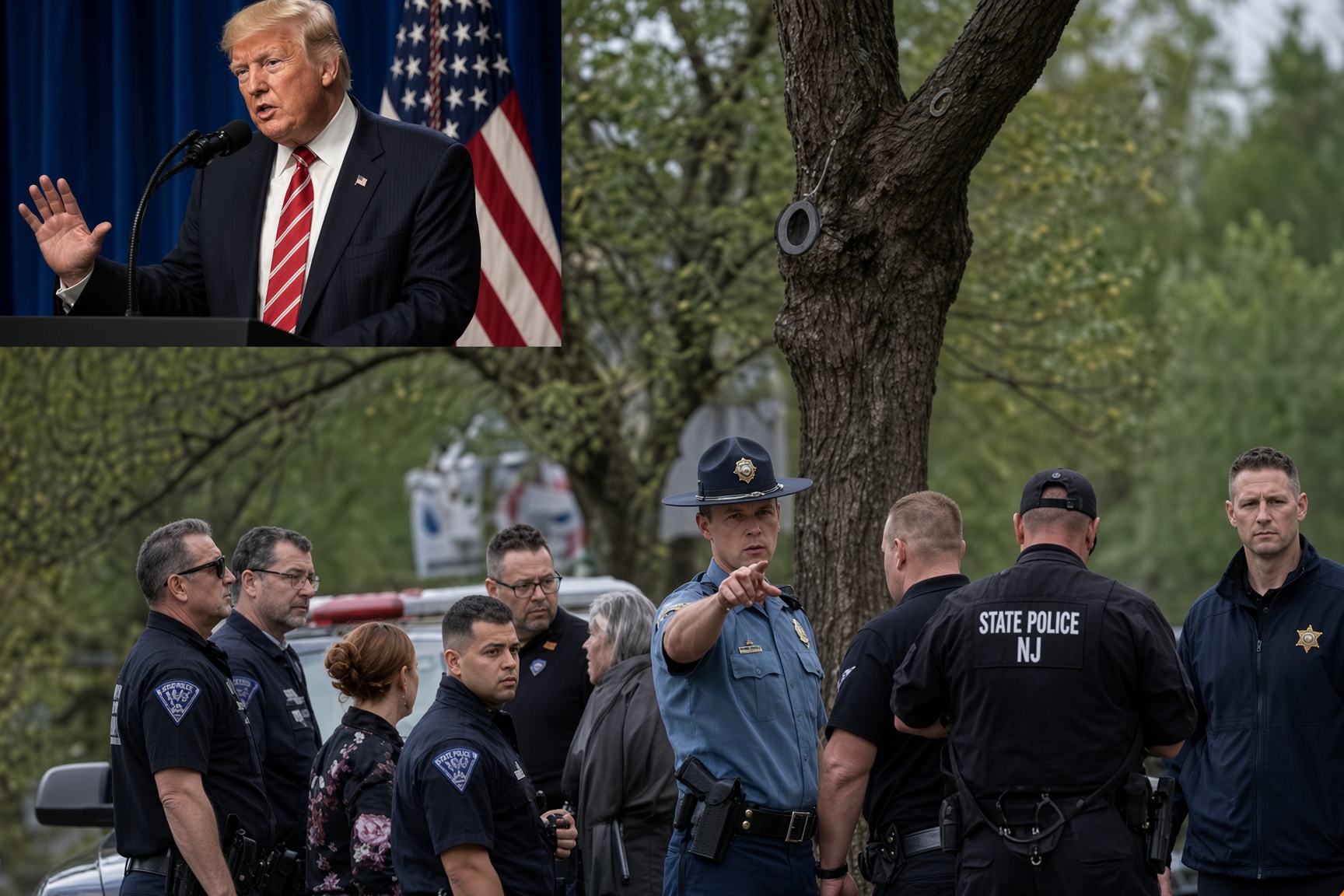
Kerry Sheron, a 69-year-old U.S. Army veteran whose Escondido, California, home became widely known as the “Trump House” for its extensive American flags and pro-Trump displays, died Sunday night from injuries sustained in a violent assault outside the property last week.
Sheron had been in critical condition for several days following the attack, which occurred around 2:15 p.m. Wednesday at the intersection of East Mission Avenue and Buchanan Street, directly adjacent to his residence. Escondido police responded to reports of an assault and found him suffering significant injuries. A bystander who intervened during the incident was also hurt.
Deputy District Attorney Ross Garcia described the attack, allegedly carried out by 32-year-old Thomas Caleb Butler. According to NBC 7, Sheron was punched once in the jaw, collapsed to the ground, and was then struck repeatedly in the head. Butler fled the scene but was located quickly and arrested without incident. He has been charged with attempted murder and is being held without bail at the Vista Detention Facility in San Diego County. The San Diego County District Attorney’s Office is reviewing the circumstances to determine whether the charges will be amended in light of Sheron’s death.
Sheron’s wife, Maria Garcia, had told reporters last week that she did not expect her husband to survive. She described the assault as politically motivated, saying the attacker “tried to kill my husband” and questioning the “hate” and “black heart” behind it. Garcia linked the hostility to the home’s visible patriotic displays. “They don’t like the flags. I don’t know why. I support America. My husband is a veteran,” she said. The couple’s property had long drawn both supporters and critics and had been the subject of complaints and vandalism for years, making it one of the most recognizable private homes in the San Diego area.
A friend of Butler’s portrayed the suspect as a Navy veteran struggling with post-traumatic stress disorder and worsening mental health issues. The acquaintance told the California Post that Butler “sits in his room and thinks everyone is coming to get him,” that his condition had deteriorated despite treatment and medication, and that he had been unemployed since leaving the Navy. The friend added that Butler was “the guy that plays with Legos and Star Wars stuff,” suggesting a contrast between his private habits and the violence of the alleged attack.
Police have not publicly declared a motive. While the highly visible political messaging on Sheron’s home has prompted speculation that politics played a role, authorities have emphasized the ongoing review of the case. The combination of the home’s history of vandalism and the severity of the beating has fueled local discussion, even as investigators focus on the facts of the assault itself.
Sheron’s death closes a chapter on a property that had become a local landmark for its unapologetic patriotic and pro-Trump decorations. For years the displays drew attention, admiration from some neighbors and passersby, and opposition from others. Garcia’s statements after the attack framed the incident as an extreme expression of that opposition, while the description of Butler’s mental health struggles points to another possible factor. With the district attorney’s office still examining the charges and no formal motive announced, the full context of why the confrontation outside the Trump House turned lethal remains under investigation.