Marine One Makes Precautionary Landing in UK; Trump and Starmer Announce Major Tech and Investment Deals During Historic Second State Visit
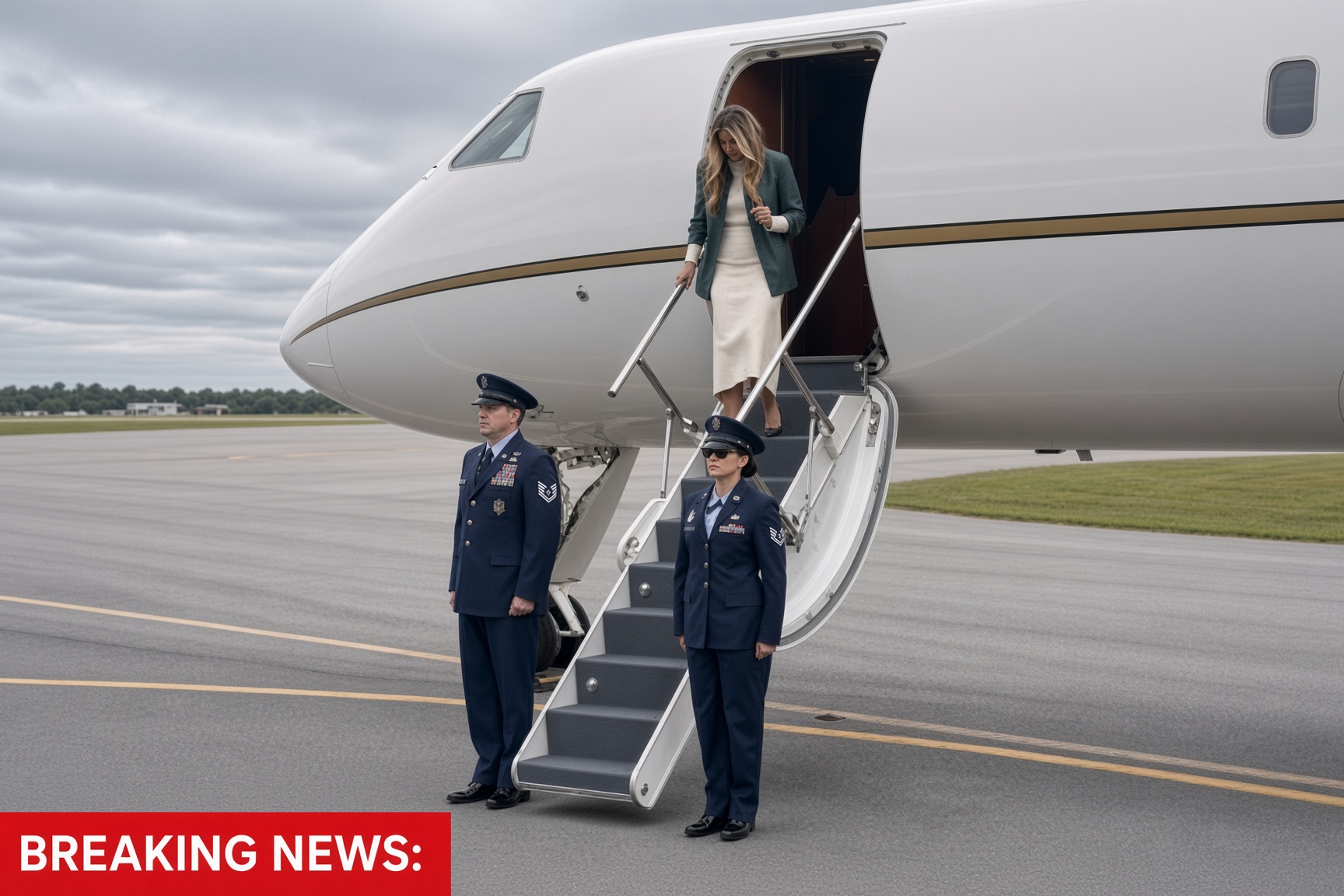
President Donald Trump and First Lady Melania Trump experienced a minor disruption on the final day of their second state visit to the United Kingdom when Marine One was forced to make a precautionary landing. White House Press Secretary Karoline Leavitt told reporters that a “minor hydraulic issue” prompted the pilots to land at a local airfield “out of an abundance of caution” before reaching London Stansted Airport. The president and first lady safely transferred to a support helicopter and continued their journey. The short flight from the prime minister’s Chequers estate was scheduled to take about 20 minutes; the diversion extended the trip to roughly 40 minutes, leaving them about 20 minutes behind schedule. Emergency services were visible at Luton Airport, where photographs showed the two presidential helicopters—often called “white tops” for their distinctive livery—parked near the runway. Officials emphasized that no one was in danger and that the switch proceeded smoothly. The couple later boarded Air Force One for the return flight to Washington.
The episode capped an unusually high-profile visit. No previous U.S. president has received a second full state visit from the British monarch. King Charles III and Queen Camilla hosted the Trumps at Windsor Castle, where the couple attended a state banquet and other ceremonial events. The visit underscored the long-standing “special relationship” while focusing heavily on economic and technological cooperation.
On Thursday, September 18, 2025, Trump flew by helicopter to Chequers, the prime minister’s country residence in Buckinghamshire, for meetings with Prime Minister Keir Starmer. After private discussions that covered topics including Ukraine, the war in Gaza, trade, energy, and free speech, the two leaders held a joint press conference and met with business executives. Starmer praised the partnership as the most “natural partnership in the world” and highlighted a substantial mutual investment package. The centerpiece was the “Tech Prosperity Deal,” a memorandum of understanding on science and technology cooperation covering artificial intelligence, quantum computing, civil nuclear energy, and related fields.
Trump described the agreement as creating “billions of dollars of opportunities” and giving the United States better access to the United Kingdom’s aerospace supply chain. He noted the deal’s emphasis on deregulation and innovation, saying it would align the two nations in areas such as AI, quantum computing, fusion research, 6G, and civil nuclear energy. “We’re taking the next logical step with a historic agreement on science and technology partnerships, and this will create new government, academic, and private sector cooperation in areas such as AI,” Trump said during remarks at a business reception. He highlighted the energy demands of advanced computing: “You need the energy. You have to have the energy. That’s one thing I learned very quickly. They need a lot of electricity.”
The British government announced that U.S. firms had pledged roughly £150 billion in investment in the United Kingdom linked to the visit—the largest commercial package associated with any state visit, according to officials. The figure includes major commitments from technology and investment firms. Blackstone, the private equity giant, accounted for the largest share, with plans to invest approximately £90–100 billion in the UK over the next decade (including previously announced data-center projects). Microsoft pledged about £22 billion over four years for cloud and AI infrastructure, including Britain’s largest supercomputer. Google committed £5 billion over two years, including data-center expansion. Nvidia said it would deploy up to 120,000 graphics processing units across the UK. Additional pledges came from companies including Palantir, Prologis, and others, with the government estimating more than 7,600 jobs created directly from the package.
Trump referenced a broader wave of private-sector deals he put at over $350 billion, headlined by a large Blackstone commitment, and singled out energy projects. He noted the long-discussed partnership between the American company X-energy and British firm Centrica for the deployment of advanced modular nuclear reactors across the United Kingdom. Officials said the Hartlepool-focused initial project and wider program could generate tens of billions in economic value, create up to 2,500 jobs, and power roughly 1.5 million homes. Trump linked the nuclear cooperation to AI ambitions, observing that seven decades after British mathematician Alan Turing helped pioneer computing, the new agreement would help the U.S. and UK “dominate the future of artificial intelligence.”
Starmer called the Tech Prosperity Deal a confirmation of the two countries’ status as first partners in science and technology, ready to “define this century together, just as we did the last.” Both leaders stressed the unbreakable bond between the nations and the potential for job creation and economic growth on both sides of the Atlantic. Trump also thanked King Charles III and Queen Camilla for their hospitality and described the visit as an honor.
The president returned to the White House on Friday after the multi-day trip. The Marine One diversion was a rare mechanical interruption for the presidential helicopter fleet, which is maintained to high standards; the last comparable issue dated to 2006. Officials framed the response as a successful demonstration of safety protocols. The broader visit, however, was defined by the ceremonial welcome at Windsor and the concrete announcements on technology, nuclear energy, and investment that both governments presented as a deepening of transatlantic economic and scientific ties.