Online Rumors Claim Trump Stumbled Boarding Air Force One, but Evidence Remains Absent
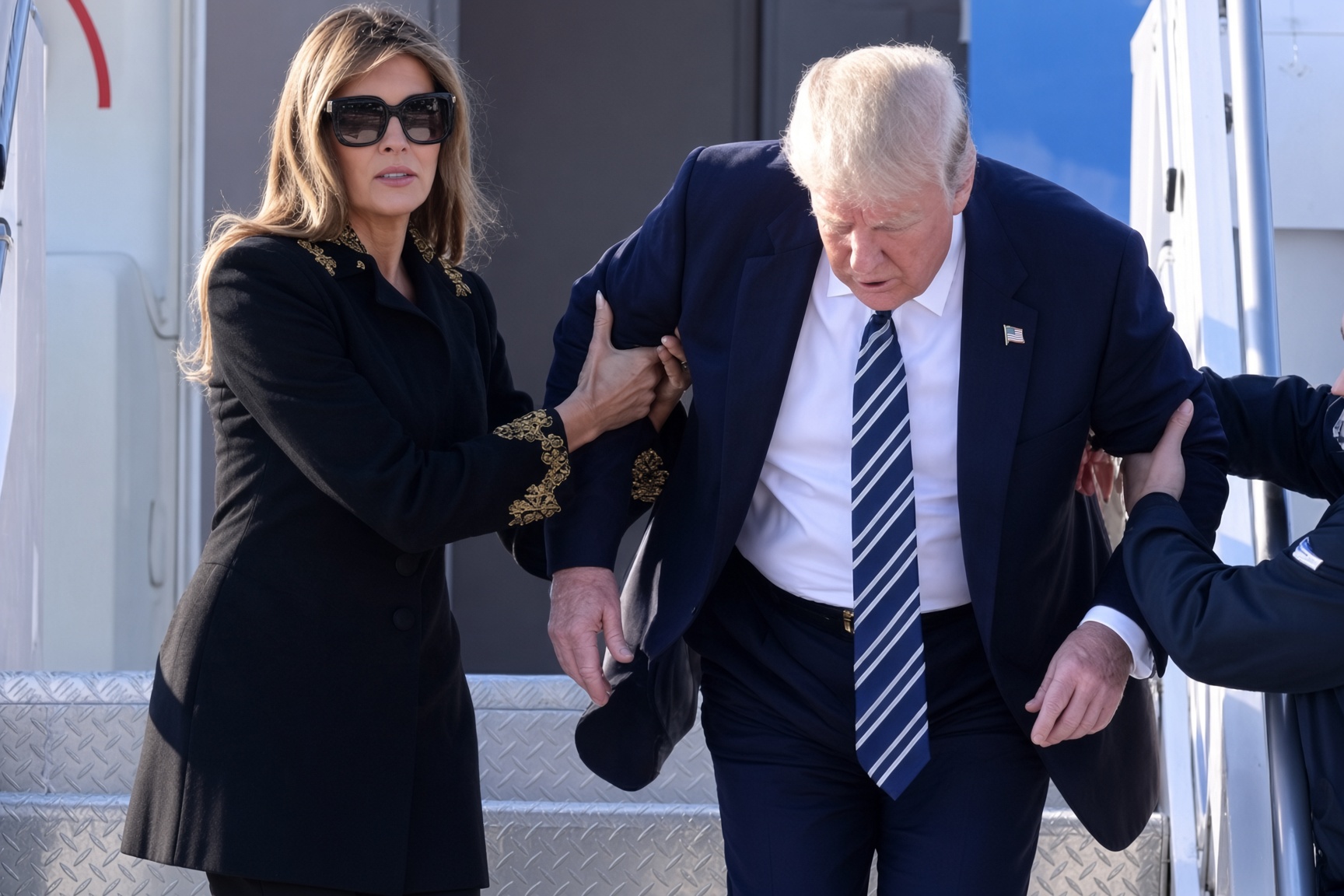
Social media posts circulating in recent days have alleged that President Donald Trump stumbled while boarding Air Force One before departing for Florida. The claims spread quickly across platforms, with some users linking the supposed incident to Russia’s ongoing war in Ukraine and speculation about a possible meeting with Ukrainian President Volodymyr Zelensky. The narrative has also revived familiar discussions about Trump’s age, physical stamina, and capacity to handle the demands of the presidency.
More dramatic versions of the story claim that a White House physician risked professional consequences by revealing details of a previously hidden medical diagnosis. None of these elements—the stumble itself, the alleged diagnosis, or any connection to diplomacy—has been supported by authenticated video, official statements, medical records, or independently verified reporting.
As of now, no credible footage or contemporaneous accounts from reliable sources have confirmed that a stumble occurred. White House communications and official travel coverage have not referenced any such incident. Claims involving a physician’s disclosure likewise lack supporting documentation. Assertions that the alleged event influenced or coincided with diplomatic planning involving Zelensky remain similarly unsubstantiated.
It is useful to keep the separate strands of the rumor distinct. Whether Trump briefly lost his balance while boarding an aircraft, whether he has any undisclosed medical condition, and whether U.S.-Ukrainian discussions were underway are three different questions. Confirmation of one would not establish the others. A momentary stumble, even if later verified by video, would not by itself demonstrate a serious health problem. Ordinary factors—uneven surfaces, footwear, fatigue, or simple distraction—can cause people to misstep. Drawing clinical conclusions from short clips, still images, or anonymous posts falls short of the standards required for medical assessment.
The same caution applies to allegations against medical personnel. Claims that a physician disclosed confidential information or faced career repercussions require documented evidence and independent verification. Absent those, treating the allegations as established fact is misleading.
The geopolitical backdrop adds intensity to the speculation. Russia’s war against Ukraine continues to dominate international attention, and any potential high-level engagement involving Washington and Kyiv naturally draws scrutiny. Yet the existence of diplomatic interest or even planned talks does not confirm that a physical incident took place or that it shaped policy decisions. Conflating unverified personal claims with major foreign-policy developments amplifies the story without adding evidentiary weight.
Health speculation about political leaders is not new, and it tends to intensify when an unconfirmed visual incident is paired with high-stakes international events. Social media accelerates this process: multiple accounts repeating a claim can create an impression of corroboration even when the underlying material has not been independently checked. Volume of posts is not a substitute for verification.
For the present, the alleged Air Force One stumble, the suggestions of a concealed diagnosis, and any implied link to Ukraine-related diplomacy remain unconfirmed. Readers can reasonably treat the story as an illustration of how rapidly dramatic political narratives circulate online while distinguishing documented information from conjecture. Should authenticated video, official clarification, or credible medical reporting emerge, the available facts can be reassessed. Until then, the prudent approach is to note the claims, record the absence of supporting evidence, and avoid treating speculation as settled reality.