Reports of U.S. Service Members Declining Duties Heighten Concerns Over Possible Strikes on Iran
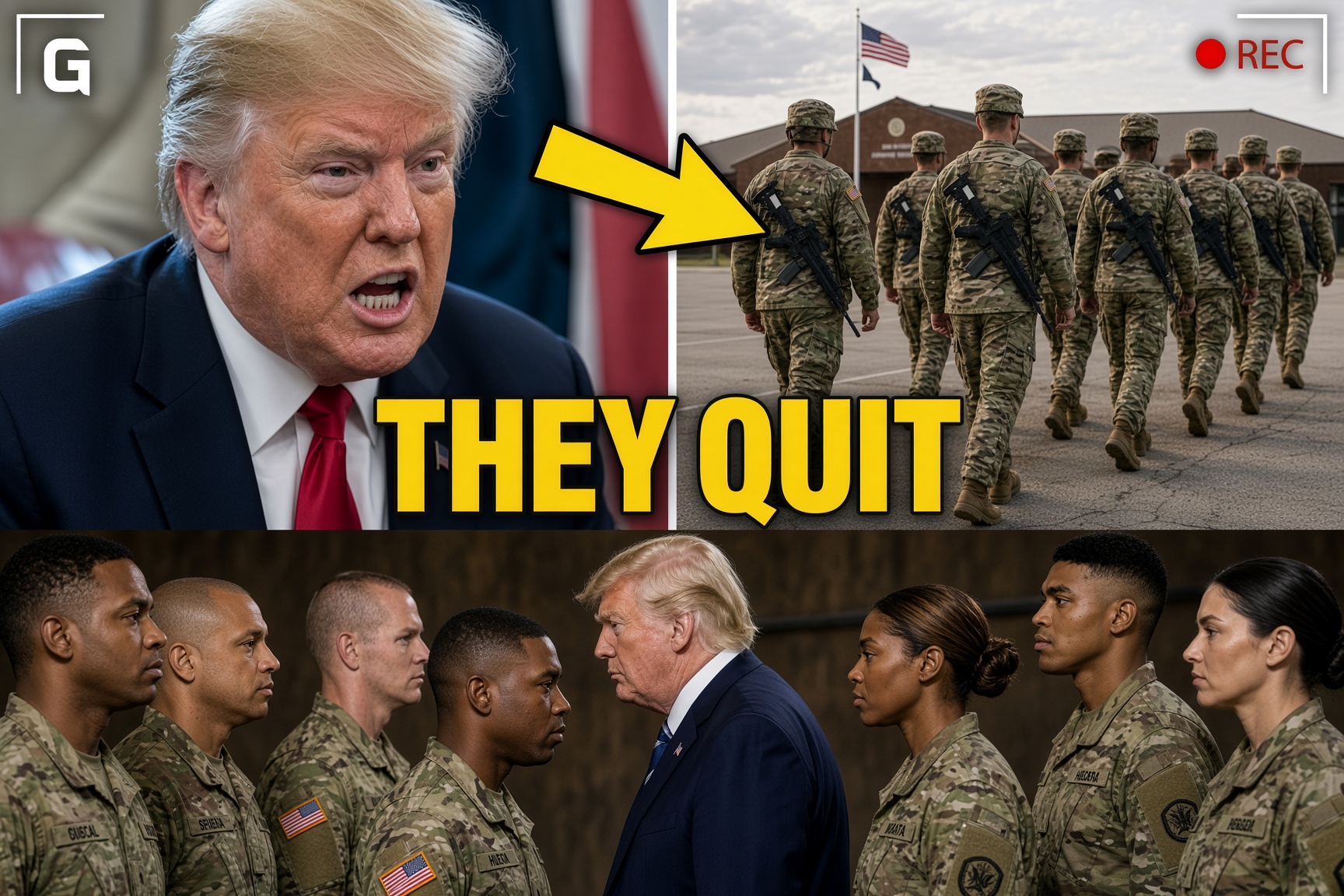
Unconfirmed accounts that some U.S. service members may be refusing certain assignments have drawn attention to unusual strain inside the American military. These reports appear against the backdrop of more pointed public comments by Donald Trump suggesting possible attacks on Iranian civilian infrastructure, including power plants and bridges.
Legal experts and humanitarian organizations caution that broad strikes on systems essential to civilian life could breach international humanitarian law and the laws of armed conflict. Destroying electricity grids, bridges, and related networks tends to inflict the heaviest costs on ordinary people long before it meaningfully limits an opponent’s capabilities. Historical experience with similar campaigns shows they seldom produce the political collapse their advocates expect. More often they strengthen nationalist feeling, bolster a government’s claim to resistance, and reduce the space for later negotiation.
In Washington the reaction has been swift. Senator Chris Van Hollen and other lawmakers have labeled the posture reckless and lacking a coherent strategy. Several members of Congress express concern that executive decisions are advancing faster than legislative review. Constitutional and statutory requirements for the use of force—authorization, debate, and funding—were designed precisely for moments when events threaten to outrun deliberation. A crisis that sidesteps those checks raises the risk of poorly controlled escalation.
The strategic picture is equally unsettled. Tehran has given little indication it will concede under open threats. External pressure frequently consolidates hard-line factions and narrows opportunities for de-escalation. Analysts also highlight the absence of a clearly defined political objective or exit strategy. Without either, military action can slide into a protracted contest that consumes resources and lives without producing a stable outcome.
The effects would extend well beyond the two countries. Attacks on civilian infrastructure would ripple through energy markets, regional alliances, and the calculations of major powers. Perceptions can prove as consequential as the first strike; a single miscalculation could lock both sides into a cycle of retaliation that becomes difficult to unwind.
Diplomats therefore view sustained communication as the immediate priority. Some accounts indicate that back-channel contacts are already being used to explore whether a pause remains feasible. The central question is whether restraint and verification can still hold, or whether the region will be drawn into deeper and more durable instability.