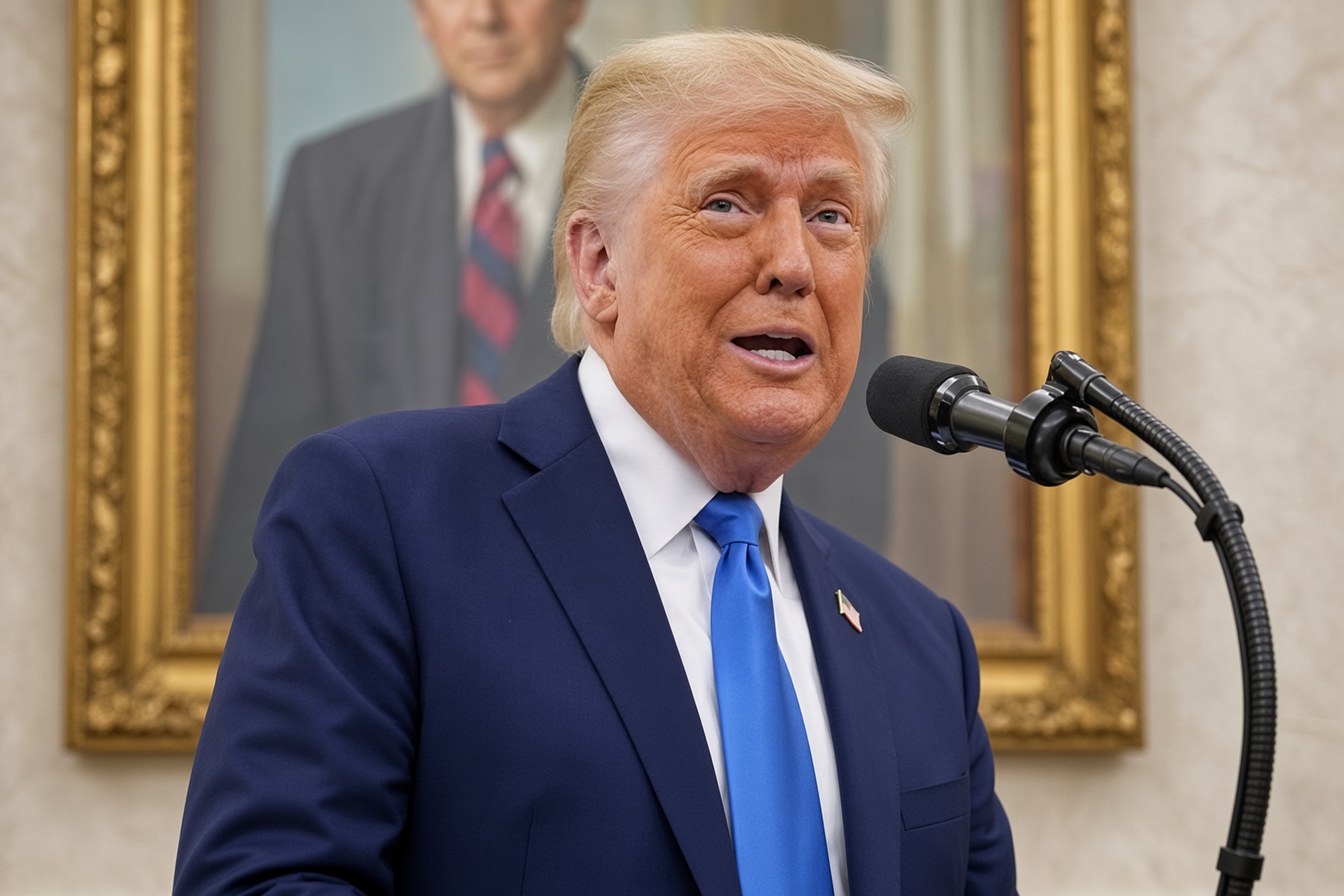
President Donald Trump’s live warnings to journalists and broadcasters have intensified long-standing arguments over the limits of government power and the protections of a free press. During recent public remarks, Trump suggested that reporters and outlets could face consequences for coverage he viewed as inaccurate or unfair. The room grew quiet as he spoke; some journalists looked taken aback while others began drafting notes. The exchange highlighted a recurring tension: presidents may criticize the media, yet the use of official authority to influence reporting raises separate constitutional questions.
In one August incident, Trump stated that NBC journalist Kristen Welker should be reported to the Federal Communications Commission over what he called a mischaracterization of his record on political endorsements. He floated the idea of a “rebuke or punishment” from the agency. NBC defended Welker and affirmed support for her work. The FCC has long maintained that its authority over broadcast content is narrow. Agency statements and legal precedent emphasize that First Amendment safeguards prevent regulators from substituting their own judgments for a broadcaster’s editorial decisions.
The dispute has not stayed confined to a single network. ABC and its parent company Disney have challenged the FCC in court, contending that an unusually early review of licenses for eight Disney-owned ABC stations amounts to retaliation tied to the network’s programming and reporting. FCC Chairman Brendan Carr has rejected that framing, describing the reviews as routine examinations of whether stations meet their public-interest obligations. The litigation continues.
On September 16, the Senate Commerce Committee advanced legislation intended to curb federal officials from pressuring private companies to suppress constitutionally protected speech. The measure passed 18-10 and would permit individuals to sue federal employees who coerce platforms or media organizations into limiting expression. Supporters from both parties pointed to concerns about government influence over private entities. The bill still needs passage by the full Senate and the House before it can become law.
These developments underscore a practical distinction. Journalists are not shielded from criticism. Public officials may challenge stories, question accuracy, and demand corrections. News organizations remain accountable for factual mistakes and should correct them promptly. When regulatory tools, licensing decisions, or access to government sources become linked to disagreements over coverage, however, the stakes shift. Transparency, due process, and independent judicial review become essential safeguards.
Newsrooms face an additional operational question: how to respond collectively without requiring uniform editorial positions. Local papers, television stations, national networks, digital outlets, and independent reporters work under different pressures and audiences. They share an interest in preserving the ability to report on public officials without facing official retaliation for protected speech. Solidarity on that principle does not require agreement on every story or political preference.
The public also has a direct stake. A free press does not guarantee harmonious relations between leaders and journalists, nor does it immunize any outlet from scrutiny. The workable standard is one in which facts can be contested in public, evidence can be examined, errors can be corrected openly, and courts can review government actions. Competing accounts remain available so that citizens can weigh them for themselves. When either side claims exclusive authority to determine what the public may hear, the constitutional balance tilts.
The current controversies illustrate why clear reporting practices matter. Outlets strengthen public trust by explaining their methods, identifying what remains uncertain, and distinguishing straight reporting from commentary. Verification, visible evidence, and rapid corrections reduce the room for accusations of bad faith. At the same time, government actors who threaten regulatory consequences over disputed journalism invite closer examination of whether those threats stay within lawful bounds. The First Amendment does not settle every argument, but it does establish that official power cannot simply silence or punish protected expression. The ongoing legal and legislative responses will test how firmly that line holds.