President Donald Trump on Sunday issued a sharp warning that the United States would intensify strikes against Iran’s energy infrastructure if an acceptable agreement to end the conflict is not reached soon, even as he suggested that a settlement appears increasingly likely.
In a post on his Truth Social platform, Trump stated that Washington is engaged in “serious discussions with A NEW, AND MORE REASONABLE, REGIME to end our Military Operations in Iran.” He wrote that “great progress has been made” but cautioned that, “if for any reason a deal is not shortly reached, which it probably will be, and if the Hormuz Strait is not immediately ‘Open for Business,’ we will conclude our lovely ‘stay’ in Iran by blowing up and completely obliterating all of their Electric Generating Plants, Oil Wells and Kharg Island (and possibly all desalinization plants!), which we have purposefully not yet ‘touched.’” Trump framed any such action as “retribution for our many soldiers, and others, that Iran has butchered and killed over the old Regime’s 47 year ‘Reign of Terror.’”
The remarks followed statements on Friday by Secretary of State Marco Rubio, who said U.S. military operations in Iran are expected to wrap up within weeks because objectives are being achieved ahead of schedule. Speaking after meetings with Group of Seven foreign ministers in France, Rubio said the timeline is consistent with earlier projections from President Trump and other administration officials that the campaign would last between four and seven weeks. “It’s a question of weeks, not months,” he told reporters, according to the BBC.
Rubio noted that the United States has received messages from Iranian authorities indicating a willingness to discuss certain issues, though he expressed uncertainty about the identity and authority of any interlocutors. “We’ve had an exchange of messages and indications from the Iranian system, whatever’s left of it, about a willingness to talk about certain things,” he said. “We’re waiting for further clarification about who it is that we would be talking to, what we would be talking about, and when we will be talking.”
Administration officials have also referenced a 15-point proposal intended to resolve the conflict. Special envoy Steve Witkoff said he is “hopeful” that talks could begin soon and that the framework could end the war. “We have a 15-point deal on the table that the Iranians have had for a bit of time,” Witkoff said. “We expect an answer from them and it would solve it all.”
On Friday, Trump said he had paused a contemplated strike on Iranian power facilities in order to create space for negotiations. “Iran is being decimated,” he remarked, adding, “We are talking now. They want to make a deal.”
The conflict opened on February 28 with coordinated U.S. and Israeli military operations. The campaign has resulted in the deaths of several senior Iranian leaders, according to U.S. statements. Rubio said Washington has also deployed additional forces to the region to preserve a range of military options as the situation evolves.
Iranian officials have accused Israel of striking nuclear facilities and major industrial sites, including steel plants. Foreign Minister Abbas Araghchi warned that Tehran would impose a “heavy price” in response. Separately, Iran’s Islamic Revolutionary Guard Corps has threatened retaliation against infrastructure linked to the United States and Israel, saying it could target industrial and energy-related assets across the region.
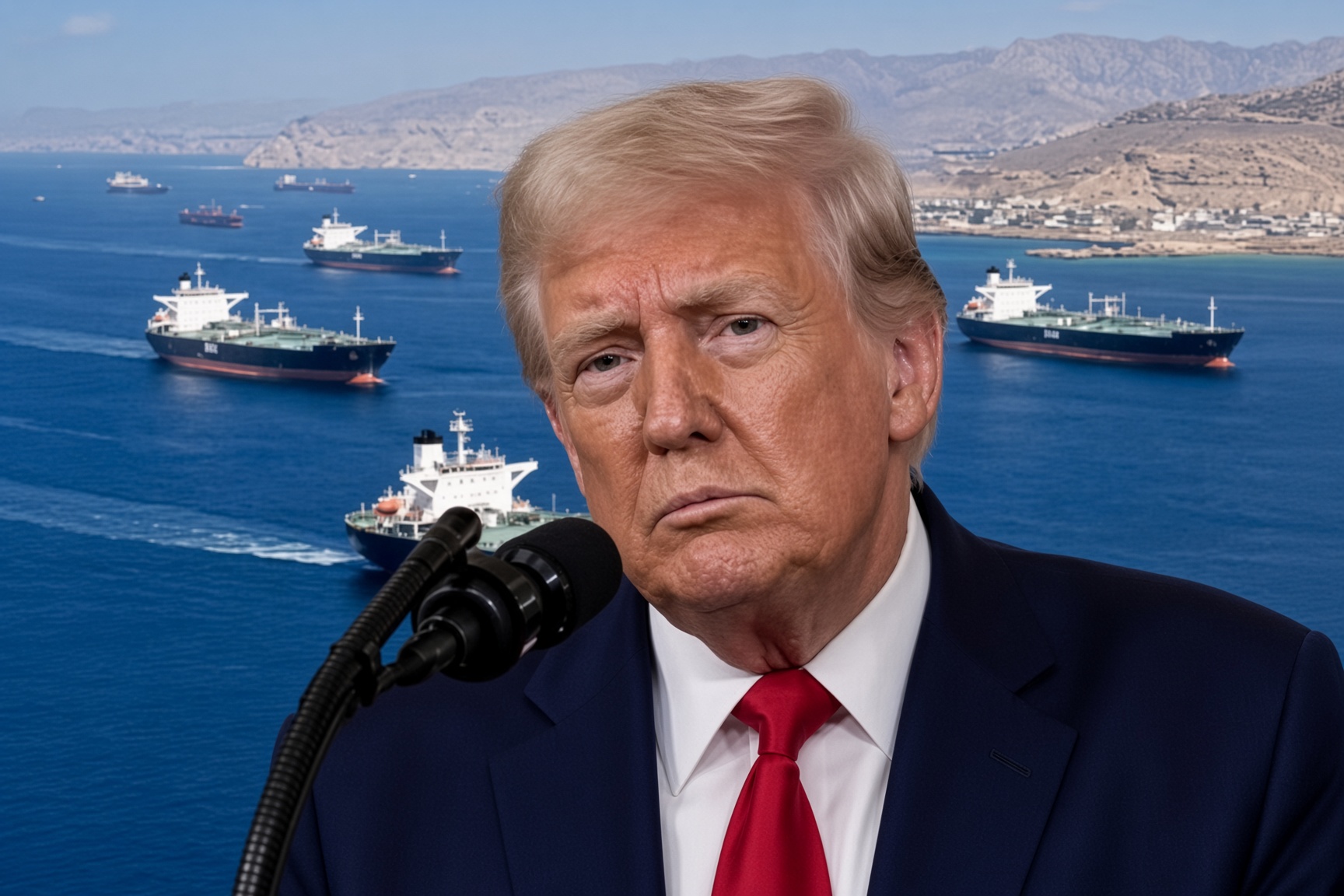
The Group of Seven has called for the full restoration of navigation through the Strait of Hormuz, a critical global energy corridor through which roughly 20 percent of the world’s oil and liquefied natural gas transit. Iran has moved to restrict passage, and Rubio said there are reports that Iranian authorities have begun charging some vessels for safe transit. Iranian lawmakers are also reported to be considering legislation connected to those restrictions.
As of Sunday, the dual track of military pressure and diplomatic outreach remained in place, with the administration portraying progress toward a possible deal while retaining the option of further strikes on energy targets if talks stall or the strait remains closed.