Recent statements from President Trump have come amid a rapidly intensifying cycle of military operations between the United States and Iran. In recent days, U.S. forces have carried out precision strikes against Iranian military targets, prompting the president to publicly assess the results of the campaign.
Trump described the scope of the operations in detail, stating that American strikes have hit Iranian air-defense systems, command-and-control centers, ballistic-missile production facilities, and naval assets. According to the president and U.S. officials, the sustained effort is intended to reduce Iranian military capabilities that Washington views as threats to regional stability and international shipping lanes, particularly in and around the Persian Gulf.
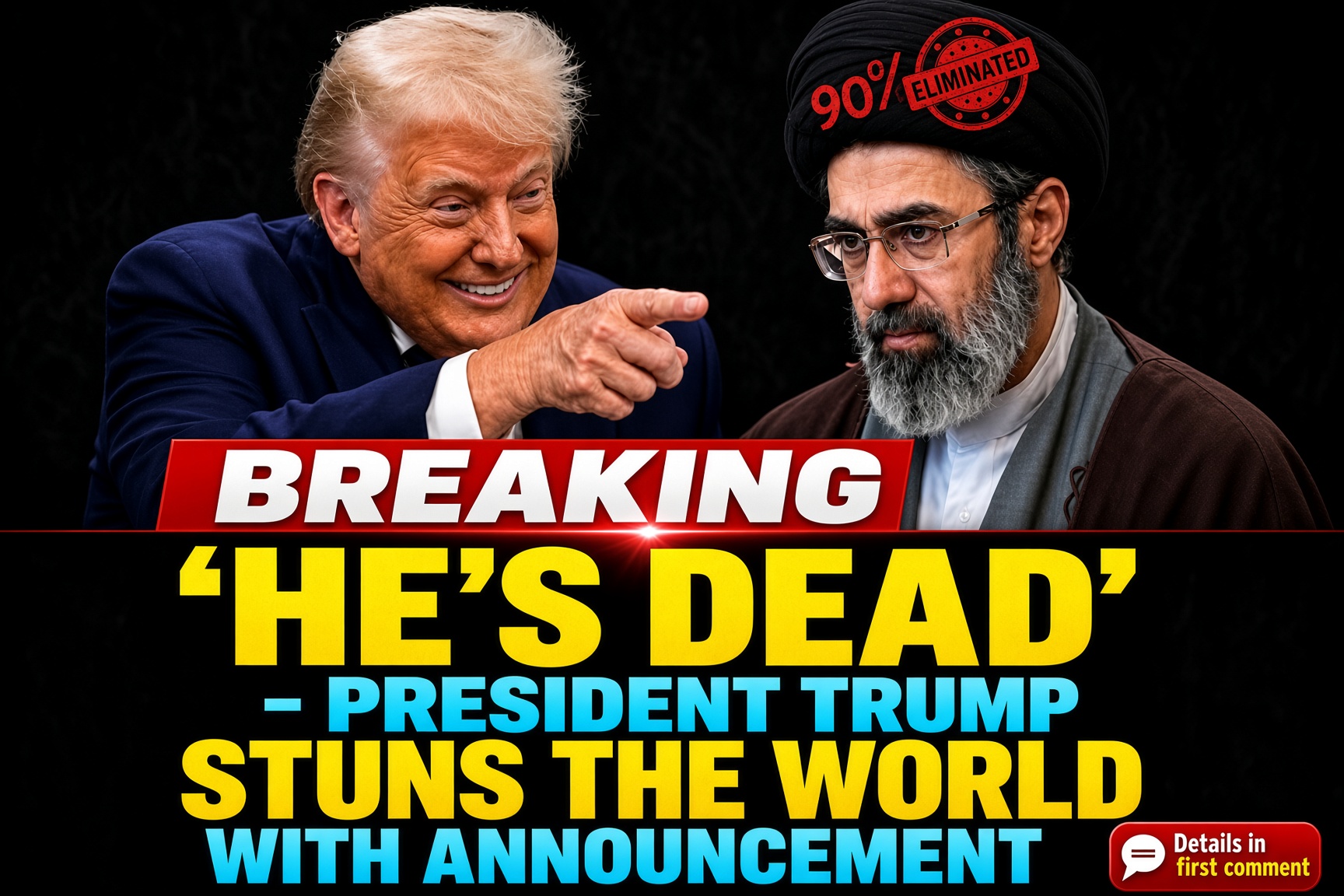
Trump also made direct assertions about the impact on Iran’s leadership structure, claiming that the strikes have disrupted the regime’s decision-making processes. He characterized the results as substantial operational gains that have degraded key elements of Iran’s military infrastructure. These comments included a new claim concerning Iran’s Supreme Leader, further elevating scrutiny of the statements.
The remarks have drawn significant attention from foreign-policy analysts and regional observers, who are assessing both the accuracy of the president’s assertions and the actual extent of damage inflicted by the strikes. Debate continues over the current condition of Iran’s military forces and governing apparatus, as well as the likely direction of the broader U.S.-Iran confrontation.
Administration officials have paired the military action with public messaging emphasizing its objectives: safeguarding American interests, preserving freedom of navigation through critical waterways, and deterring Iranian attacks on commercial shipping and regional partners.
The operations mark a notable shift in Middle East dynamics. Uncertainty now surrounds how long the campaign will last, whether additional strikes will follow, how Iran might respond, and whether any diplomatic channels could open to reduce tensions. U.S. leaders face the task of applying military pressure while seeking to limit the risk of nuclear proliferation. Iran, for its part, must contend with weakened military capabilities and a changed regional position.
Decisions in the weeks ahead are expected to shape whether the present trajectory moves toward further confrontation or creates conditions that could support de-escalation and negotiations.