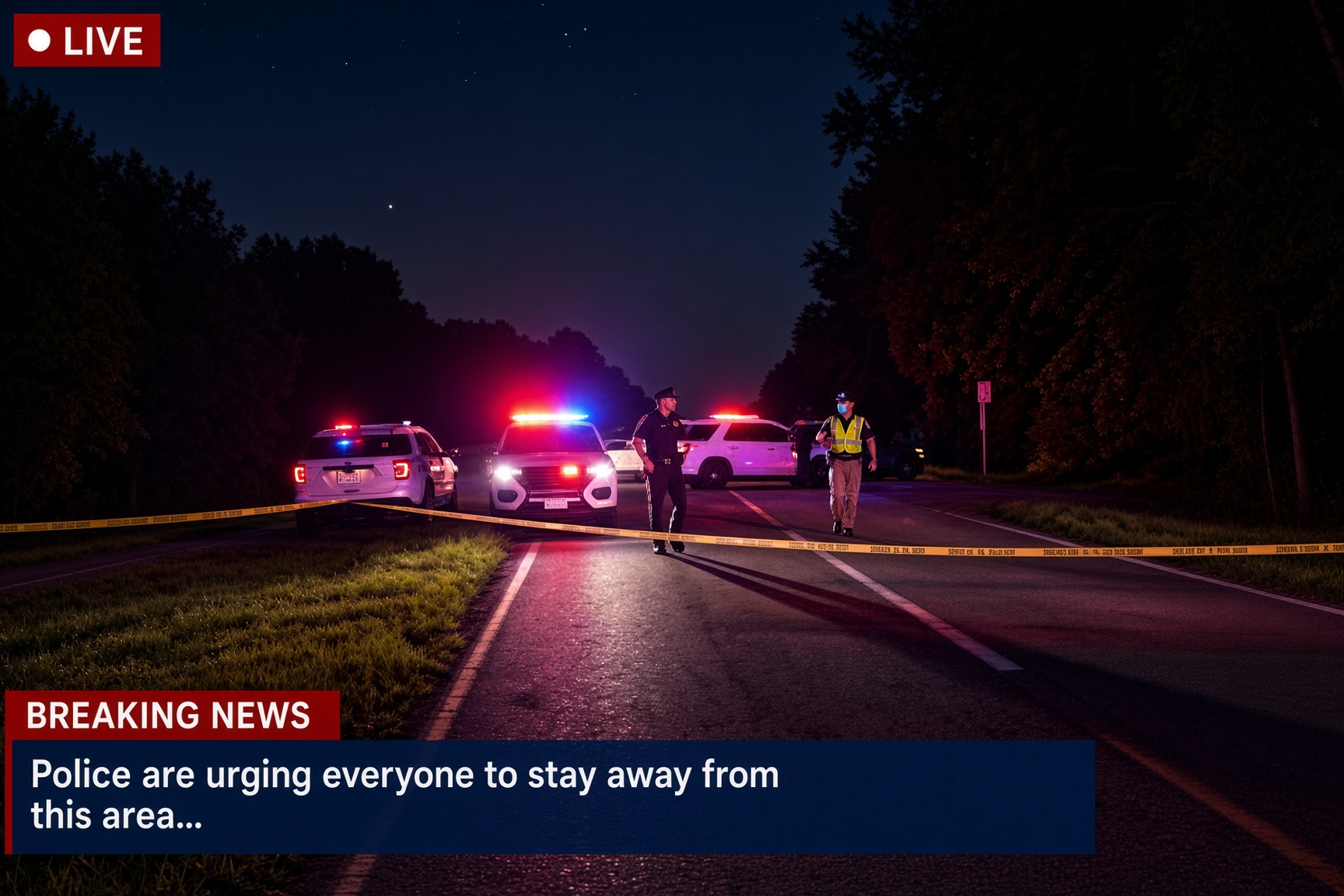
A massive, highly coordinated mobilization of municipal police, heavily armed tactical squads, regional emergency services, and specialized hazard teams has cordoned off several downtown blocks, establishing a fortified security perimeter that has paralyzed the city’s commercial heart. Commanders continue to evaluate an active, unresolved public safety incident more than twenty-four hours after the initial callout.
Public safety directors deployed a unified incident command post within minutes of the emergency activation on Thursday evening, abruptly shuttering high-volume thoroughfares, closing busy pedestrian pathways, and issuing urgent mass-broadcast bulletins. Residents, office workers, and commuters were repeatedly advised to bypass the cordoned sector entirely as the footprint of the response expanded block by block.
Emergency medical crews, hazardous-materials teams, bomb technicians, and specialized tactical units remain staged at key intersections and elevated positions. Field commanders work methodically to determine the precise scope of the threat while maintaining strict control over the inner zone.
Unresolved Threat and Strict Operational Silence
Despite a significant and highly visible police presence—including armored vehicles, mobile command centers, and officers in full tactical gear—department leadership has maintained a strict operational silence regarding the specific catalyst that prompted the callout. High-ranking officials have declined to specify whether the situation involves an active barricade, a suspicious device, a chemical or environmental hazard, or an armed barricaded subject. They cite the dynamic, unresolved nature of the scene and the operational imperative to protect first responders as initial containment sweeps and technical assessments proceed.
The security footprint escalated rapidly from routine patrol deployments into an expansive, multi-agency response. What began as a localized police callout quickly drew mobile tactical operations centers, additional armored vehicles, specialized explosive and technical hazard teams, and support from neighboring jurisdictions to isolate the affected footprint.
“We are dealing with an active, fluid situation, and our absolute priority remains containment and the safety of the public and our officers on the scene,” a department spokesperson said during a brief, impromptu media pool briefing just outside the outer perimeter late Thursday. “We ask for the public’s patience and cooperation as our specialized units work to resolve this safely. Speculation does not help that process.”
A second, equally concise statement issued Friday morning reiterated that no timeline for resolution or reopening could be provided and that further details would be released only when they could be shared without compromising the operation.
Intersecting Perimeters and Restricted Boundaries
Incident commanders confirmed that access across the inner security perimeter has been restricted exclusively to tactical personnel and critical technical specialists. Concrete dividers, heavy patrol vehicles, and retractable barriers have been positioned across primary intersections to secure a clear transit corridor for arriving emergency apparatus and to safeguard the public from potential kinetic or environmental hazards.
Field supervisors outlined a multi-tiered containment structure governing the site:
- Inner Perimeter Containment: Specialized tactical teams and forensic sweeps methodically clear the immediate incident zone to evaluate potential structural, explosive, chemical, or ballistic hazards before investigative personnel can enter the primary site. Progress is described as deliberate and resource-intensive.
- Secondary Buffer Corridor: Traffic division officers have fortified a wide outer safety zone to intercept incoming vehicle and pedestrian traffic, ensuring emergency equipment maintains unobstructed transit lanes to and from nearby trauma centers and staging areas. Several side streets remain closed as additional staging space.
- Dynamic Safety Protocols: Officials noted that perimeter boundaries remain fluid and subject to immediate expansion or contraction based on real-time field intelligence and the movements of tactical teams. Residents in adjacent blocks have been warned that temporary expansions are possible without extended notice.
Authorities have firmly declined to offer an estimated time of reopening, emphasizing that lifting the heavily guarded barricades depends entirely on completing thorough safety checks, verifying physical security, and securing formal operational clearance from the unified command post.
Strict Shelter-in-Place Directives Issued
Emergency management coordinators have issued targeted wireless emergency alerts urging the public to heed all instructions from uniformed personnel and authorized civic messaging systems. Occupants within residential buildings, high-rise office towers, and storefronts facing the perimeter were advised to shelter in place, lock external doors, stay away from windows, and await further instructions from official channels. Some high-rise residents reported being asked to move to interior rooms on lower floors as a precaution.
Public safety officials issued strong warnings against crowds forming near the police tape. They noted that civilian rubbernecking and onlookers gathered at the barriers impede high-speed tactical maneuvers, risk overwhelming emergency radio communication, and expose bystanders to potential danger should the situation escalate.
“People gathering to watch or take video on their phones do not understand the level of risk they are placing themselves and our officers in,” a field commander noted on the ground Thursday evening. “If this situation changes rapidly, those crowds become a significant evacuation and safety hazard. Please stay clear.”
Gridlock and Urban Disruptions Multiply
The prolonged gridlock has triggered severe, cascading friction throughout the metropolitan transit network. The closure of major arterial routes forced regional transit authorities to reroute multiple bus lines, cancel local curb stops, and divert commercial and private vehicles onto already congested secondary roads. The resulting diversions generated widespread gridlock across neighboring business districts during both Thursday’s peak evening hours and Friday’s morning commute.
Corporate offices, commercial retailers, restaurants, and public institutions operating within or immediately adjacent to the restricted boundary have suspended business operations. Many sent employees home where possible or kept them safely indoors, awaiting an all-clear from city administrators before resuming normal trade. Parking garages inside the perimeter remain inaccessible, stranding some vehicles overnight.
Pushing Back Against Public Speculation
Faced with an information vacuum common during early-stage containment operations, departmental public information officers issued stern appeals against the dissemination of unverified claims across online networks. Emergency directors emphasized that fast-moving incidents frequently give rise to intense internet conjecture, which can produce fabricated casualty numbers, conflicting descriptions of suspects, and false accounts of gunfire, explosions, or chemical releases. Authorities warned that viral speculation generates unnecessary public panic, misdirects critical emergency dispatch and communication resources, and can complicate tactical maneuvers on the ground.
“We urge everyone to refrain from posting unverified hearsay on social media,” the department’s public information office posted Thursday night and again Friday morning. “It spreads fear and distracts our dispatchers and on-scene personnel who need to focus entirely on resolving the situation. Official updates will come from verified channels only.”
Agency spokespersons stressed that factual updates regarding the nature of the incident, threat mitigations, and transportation updates will be released solely through verified department briefings and municipal alert systems.
Detectives, technical forensics teams, and municipal safety inspectors have begun preliminary investigative workflows to establish the sequence of events that led to the heavy emergency response. Investigators are securing and archiving public traffic cameras, closed-circuit security recordings, and building surveillance video from surrounding parcels, while interviewing initial 911 callers and witnesses. The process is expected to continue for some time even after the tactical phase concludes.
Municipal officials have pledged to provide a comprehensive public briefing as soon as investigators verify physical evidence that can be disclosed without compromising the ongoing operation or the safety of the personnel involved. Until that clearance is issued, the downtown perimeter remains firmly in place and the commercial core of the city stays largely shuttered.