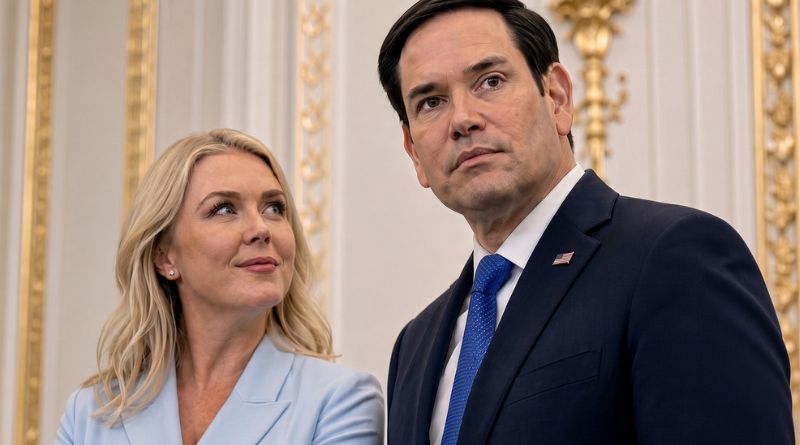
Secretary of State Marco Rubio announced that a newly created Birth Tourism Prevention Task Force has already moved against hundreds of people worldwide in its first month. Officials say the rings profit by exploiting U.S. law: they coach clients on how to get visitor visas, arrange travel and housing, and in some cases forge documents so a child born on American soil becomes a citizen.
“American citizenship is not for sale,” Rubio said. He described “elaborate birth tourism rings” that defraud the visa system and pledged that the department would use “all available tools to dismantle” those networks and “defend the integrity of U.S. citizenship.” The State Department’s own announcement said the task force reviews visa holders globally, links data across agencies including the Department of Homeland Security, and revokes visas when there are signs of ineligibility. Early tallies put revocations tied to the effort at more than 600; later reporting put the figure above 750 and rising.
The campaign sits inside a broader Trump administration push on birthright citizenship. Giving birth on U.S. soil is not itself a crime. Coming on a visitor visa with the primary purpose of obtaining citizenship for a child, and the fraud that often accompanies that plan, can be. Since 2020, U.S. policy has been to deny visitor visas when consular officers conclude that childbirth is the main reason for the trip. That rule remained in place through the Biden years. The new task force adds retrospective reviews, more visa revocations, and tighter coordination with DHS after travelers have already entered or applied.
Rubio’s own biography is often cited in this debate. Born in 1971 to Cuban immigrant parents who later naturalized, he is treated as a natural-born citizen under the Constitution and long-standing Supreme Court precedent. Administration officials contrast that path with commercial operations that treat citizenship as a product.
Analysts draw a similar line. Colleen Putzel-Kavanaugh of the Migration Policy Institute told Newsweek that birth tourism is a policy “conundrum”: delivery on U.S. territory is legal, but intentional travel for that purpose plus visa fraud is not. She distinguished “birth tourists” — people who come solely to obtain citizenship for a child — from Rubio’s own birth and from births to unauthorized parents, even though all sit under the birthright-citizenship umbrella.
Jeremy Beck, co-president of NumbersUSA, praised the enforcement focus. He argued that birth tourism “undermines the integrity of birthright citizenship” the way asylum shopping undercuts humanitarian programs. The United States and Canada, he noted, are unusual among developed economies in extending automatic citizenship to children of tourists. After a Supreme Court ruling that left birthright citizenship intact for children of people unlawfully or only temporarily present, Beck said anyone who successfully misleads an officer is “rewarded with a U.S.-citizen child.” That, he argued, makes stopping the practice before entry more important. He called on Congress to write the visitor-visa rule into statute, pointing to bills from Sen. Marsha Blackburn and Rep. Rich McCormick that would make tourists inadmissible if their intent is to have a baby for citizenship.
The department has not publicly named the countries or firms in this latest wave. Officials say facilitators sometimes market themselves as doulas, midwives, or wellness providers while advertising U.S. births, visa coaching, and hospital packages. Rubio framed the task force as a start, not a finish: citizenship, in this account, is not inventory for overseas operators to sell.