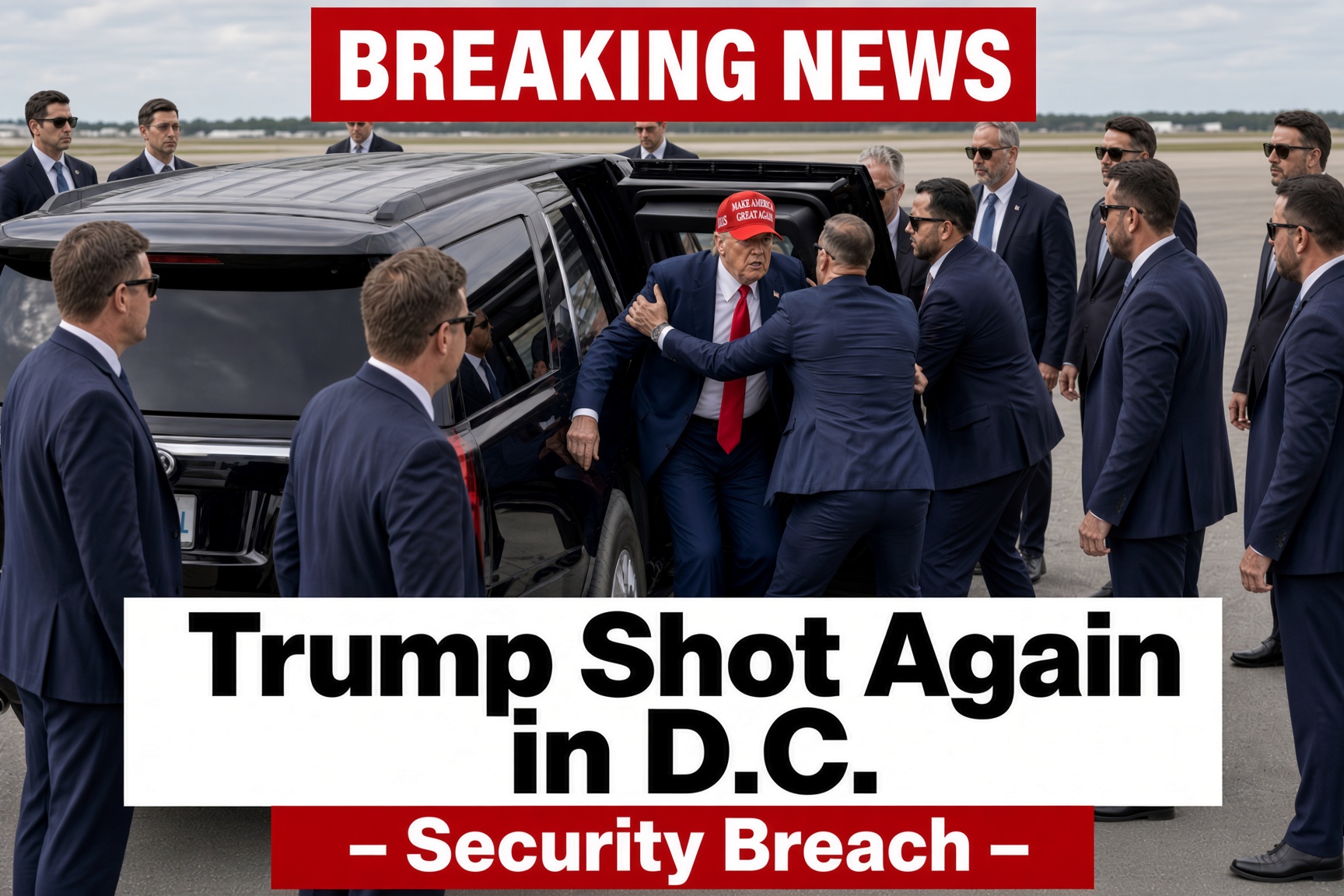
WASHINGTON — A claim that former President Donald Trump had been “shot again” in Washington, D.C., spread rapidly across social media, triggering panic, speculation, and a rush of partisan reaction. Within hours, the story looked far thinner than the posts that carried it.
No Secret Service statement, hospital bulletin, or confirmed report from a major news organization has described a new attack on Trump in Washington or anywhere else. Outlets that routinely confirm incidents of this scale within minutes have reported nothing of the kind. Federal authorities have also been silent — a strong sign that the viral wording is not grounded in a verified event.
Much of the surge appears to have come from recycled video, misleading captions, and engagement-driven posts. Several of the most dramatic items traced back to unverified accounts and private groups that used alarmist language without evidence. In an environment where a single post can outrun official updates, false alarms of this kind have become familiar.
The rumor should not be confused with documented incidents. In July 2024, Trump was wounded in the ear during an assassination attempt at a rally in Butler, Pennsylvania. That attack is a matter of public record: a spectator was killed, others were injured, and it produced federal investigations and lasting changes in security. Later threats and security incidents have also been reported. None of that confirms the claim circulating today that Trump has been shot again in Washington.
False alarms are not harmless. They can spark unnecessary panic, flood emergency lines, mislead the public, and wear down trust in real reporting. They also pull public-safety agencies into rumor control instead of actual emergencies. High-profile figures remain easy targets for sensational headlines, especially in politically tense periods. The incentive is often clicks and outrage, not verification.
What can be said with confidence is limited and important: there is no confirmed evidence that Trump has been shot again in Washington or elsewhere. Officials and established newsrooms continue to urge the public to wait for named sources — government statements and reporting that can be checked — before treating “breaking” social posts as fact. A dramatic caption is not confirmation. In a cycle where unverified claims can reach millions in minutes, the most useful response is still the slowest one: pause, check, and wait for something that can be verified.