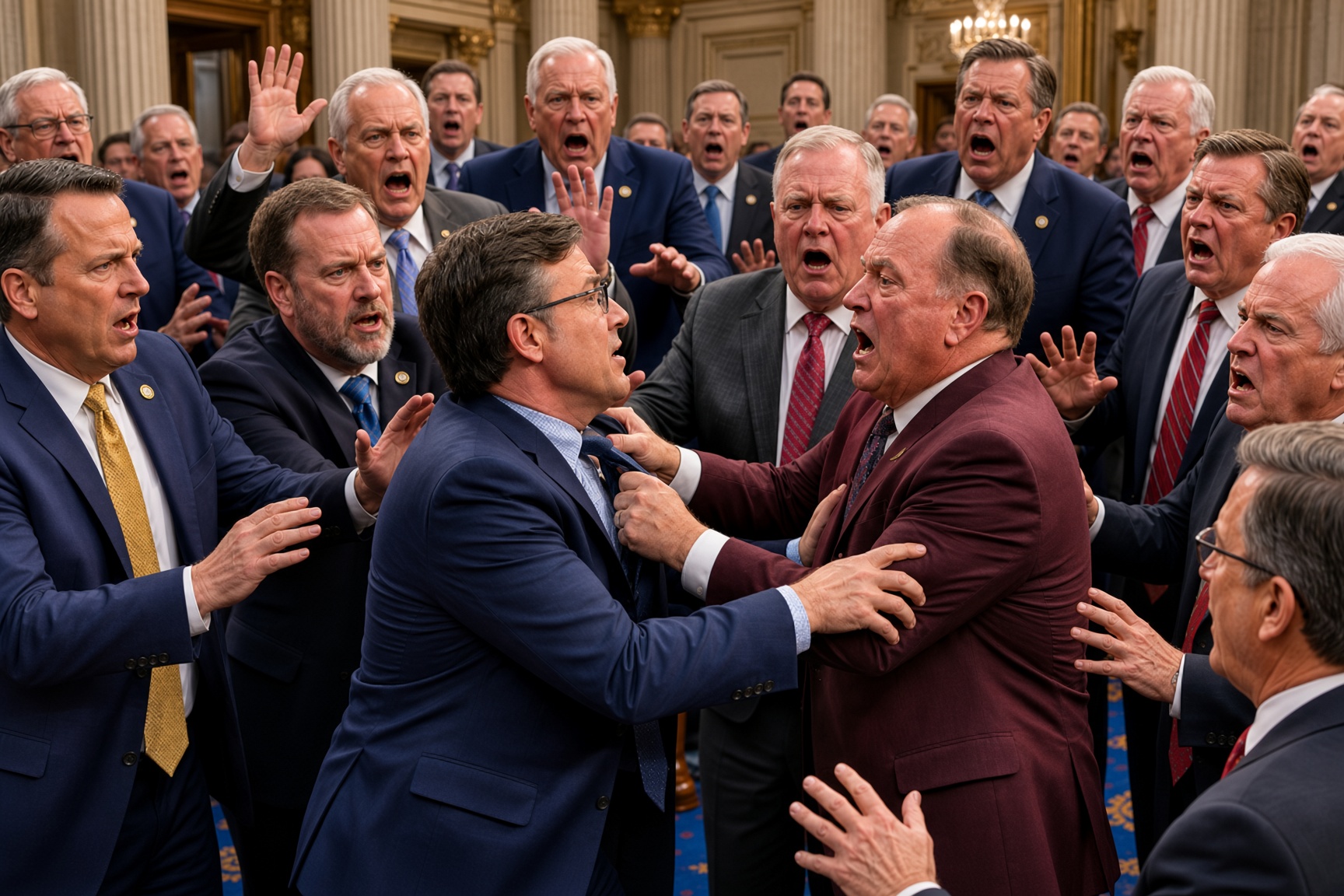
Washington — The U.S. House of Representatives on Friday approved the SPEED Act by a 218-213 vote, advancing legislation aimed at accelerating federal permitting for large-scale artificial intelligence data centers and the power infrastructure required to support them.
Sponsored by Republican Rep. Bruce Westerman of Arkansas, the bill focuses on reforms to the National Environmental Policy Act (NEPA). It would streamline environmental reviews that have long delayed major construction projects and shorten the statute of limitations for related lawsuits from six years to 150 days. Supporters argue the changes are essential to meet rapidly growing demand for computing capacity and reliable electricity as AI capabilities expand.
“The expansion of AI computing power for both civilian and military use is a national imperative,” Westerman said, stressing the need for the United States to maintain its technological edge, particularly relative to China. The measure drew public endorsements from major technology companies including OpenAI, Micron, and Microsoft.
Passage came after last-minute internal negotiations. Some conservative Republicans sought amendments to protect earlier executive actions limiting offshore wind and other green-energy projects. Most Democrats opposed the final version. Rep. Scott Peters of California warned that the legislation would codify a “broken permitting status quo” and expressed hope that a more bipartisan approach could emerge in the Senate.
The House action aligns with a separate Trump administration initiative, the U.S. Tech Force. The two-year program seeks to recruit roughly 1,000 engineers and technical specialists to modernize federal AI systems, working in partnership with companies such as Amazon Web Services, Apple, Google, Nvidia, Oracle, and Palantir.
Together, the SPEED Act and Tech Force address two central constraints on American AI leadership: lengthy regulatory processes and shortages of specialized talent. The bill now moves to the Senate, where further negotiations are expected. The narrow House margin highlights ongoing partisan divisions over how to balance rapid AI expansion with environmental review standards amid global competition for technological leadership.