President Donald Trump signaled Thursday that resolving the long-running confrontation with Cuba’s communist government ranks among his priorities for the remaining years of his second term, and he left open the possibility of limited military action if other measures fail.
Speaking with conservative radio host Hugh Hewitt, Trump said he wants to “get Cuba done” before he leaves the White House. When Hewitt asked whether he would authorize military force to free the island, Trump replied that he would “certainly consider” a short campaign lasting roughly a week. The remarks are among the most direct he has made on the use of force against Havana.
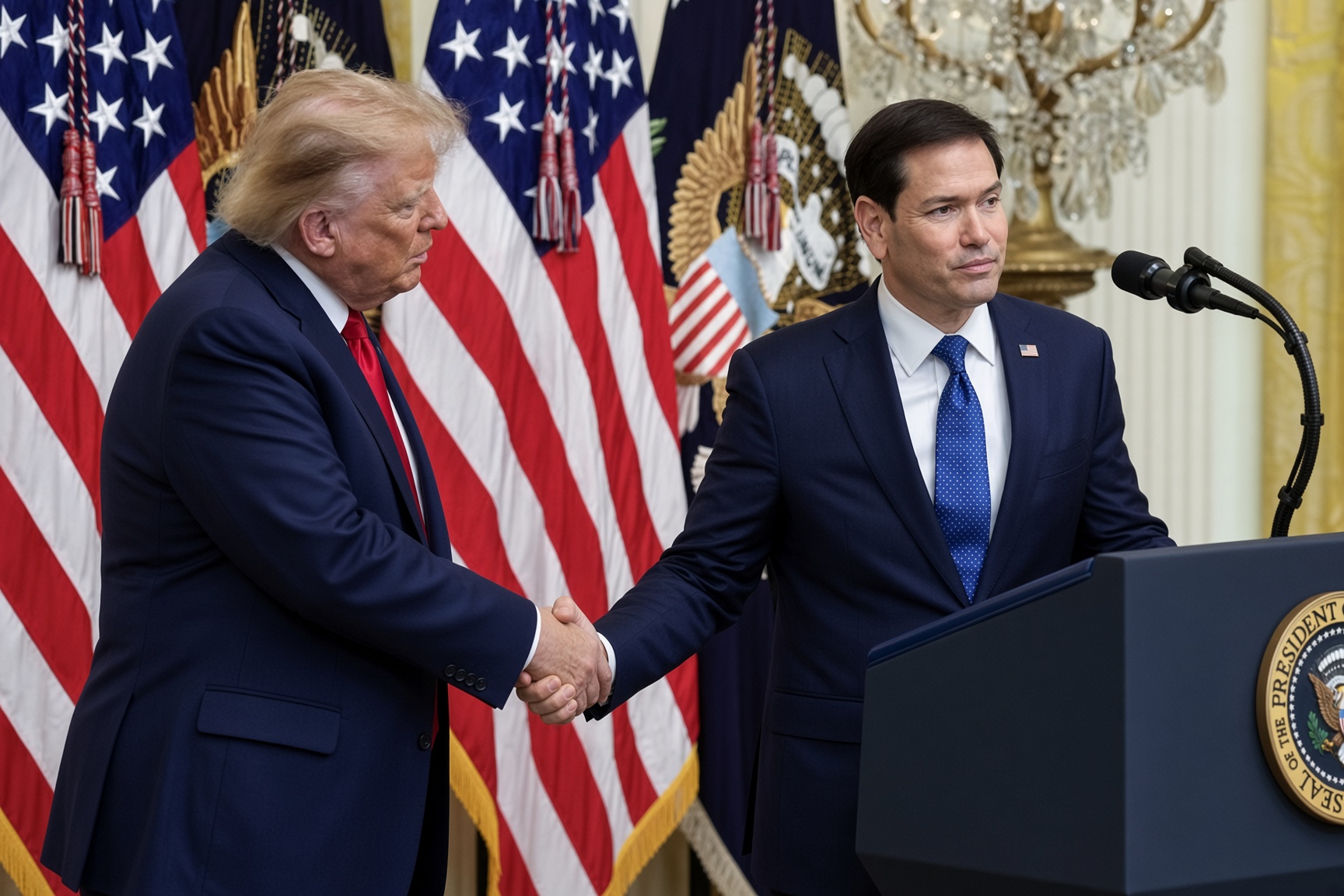
Trump singled out Secretary of State Marco Rubio as a central figure in any Cuba strategy. He noted that Rubio’s parents emigrated from Cuba before his birth and said the secretary “would love to do that.” Rubio has spent much of his political career pressing for tougher U.S. measures against the Castro-era system that succeeded Fidel Castro.
The administration is already applying heavy economic pressure. Earlier this year Trump designated Cuba an “unusual and extraordinary threat” to the United States and warned of tariffs on countries that supply oil to the island. Additional sanctions have targeted Cuban officials and entities linked to the government, military, and energy sector. The result, according to reports from the island, has been recurring fuel shortages, blackouts, and deepening economic distress under President Miguel Díaz-Canel.
Trump has repeatedly described Cuba as a failed state. In the Hewitt interview he said the country is “doing very poorly” and “essentially a failed… place, nation.” Earlier in the week he predicted that the communist government “will fall fairly soon” and suggested that the United States might later provide humanitarian assistance once the regime collapsed. He framed any action as support for Cuban Americans who fled repression and for those still on the island.
Cuban officials have rejected the U.S. campaign. They accuse Washington of trying to strangle the economy and force regime change, and they have stated that Cuba will defend itself against any military intervention. Havana has not publicly altered its posture in response to Thursday’s comments.
Trump stopped short of announcing an operation or setting a firm timetable. His statement that he wants the Cuba issue resolved before he leaves office nevertheless places a political deadline on one of the administration’s most assertive foreign-policy goals. For now, he said, Washington is “watching it very closely.”
The exchange with Hewitt also highlights the personal dimension Rubio brings to the portfolio. As the son of Cuban exiles, Rubio has long argued that the island’s political system is both illegitimate and brittle. Trump’s comments suggest the secretary could shape both the pressure campaign and any contingency planning that follows.
Whether economic measures alone will produce the political change Trump seeks remains uncertain. Cuba has weathered previous U.S. sanctions for decades, though the current combination of oil restrictions, broader sanctions, and internal economic mismanagement has created visible strain. Any decision to move from pressure to limited force would carry significant risks, including regional reactions and the possibility of escalation. Trump’s remarks make clear that the option is on the table, while emphasizing that the administration continues to monitor conditions on the island.
The interview therefore marks a sharper public articulation of the administration’s Cuba policy: sustained economic coercion, a preference for regime change within the remaining term, and an explicit willingness to weigh short-term military action if the situation is judged to require it.