WASHINGTON — Senior officials in the Trump administration are pursuing a high-stakes diplomatic effort to end the military confrontation with Iran, seeking to balance ongoing talks mediated by Qatar with a sustained naval blockade in the Persian Gulf.
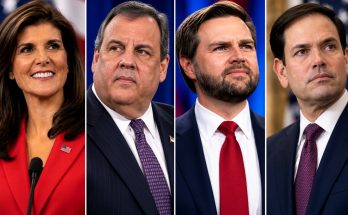
President Donald Trump, Vice President JD Vance, and Secretary of State Marco Rubio have been shaping the outlines of a potential settlement intended to limit Tehran’s nuclear program and restore free commercial passage through the Strait of Hormuz. Negotiators continue to exchange draft language in Doha even as the situation on the water remains tense, marked by recent exchanges between U.S. carrier groups and Iranian coastal defenses.
Speaking with reporters during an official visit to India, Rubio delivered a firm message on the shipping corridor. “The straits have to be open, they’re going to be open,” he said. “What’s happening there is unlawful, it’s illegal, it’s unsustainable for the world, it’s unacceptable.”
Rubio noted that indirect talks through Qatari mediators remain underway but cautioned that reaching final terms will require further detailed work. “There were some talks going on in Qatar today, so we’ll see if we can make progress,” he said. “I think it’s a lot of talking back and forth going on about specific language in the initial document, so it’ll take a few days. The president expressed his desire to make it. He’s either going to make a good deal or no deal.”
While diplomats work through proposals in Doha, the military posture in the region stays on a combat footing. A senior U.S. defense official said nearly two dozen American warships—led by two aircraft carrier strike groups and their escorts—along with dozens of combat aircraft, are enforcing a maritime interdiction blockade. The operation is designed to restrict traffic into and out of Iranian ports across the Gulf of Oman and the Arabian Sea.
Tensions turned kinetic on Monday when Iranian surface-to-air missile batteries engaged American aircraft and naval vessels near the edge of the blockade zone. U.S. forces answered with precision strikes that targeted the launch sites and degraded nearby radar systems. The incident is the latest breach of a fragile, six-week-old pause in hostilities. Both sides had agreed to a temporary halt in large-scale aerial operations to allow negotiations to proceed, yet sporadic tactical clashes in international airspace and coastal waters have continued to risk derailing the talks before any formal agreement can be signed.
In Tehran, Iranian officials offered a cautious reading of the discussions. Foreign Ministry spokesman Esmaeil Baqaei acknowledged progress on many technical points while warning against expectations of a swift breakthrough. “It is correct to say that we have reached a conclusion on a large portion of the issues under discussion,” he said at a weekly briefing. “But to say that this means the signing of an agreement is imminent—no one can make such a claim.”
Iranian negotiators are pressing for immediate sanctions relief and binding security guarantees before accepting structural limits on their nuclear and industrial programs. Tehran has also expressed frustration over what it describes as late-stage shifts in U.S. demands concerning verification measures and the timeline for releasing frozen overseas assets.
Sources familiar with the talks describe a proposed framework built on reciprocal steps. On the maritime side, Iran would remove defensive mines, withdraw fast-attack missile boats, and guarantee unobstructed commercial transit through the Strait of Hormuz; in exchange, the U.S. Navy would end its interdiction blockade and allow normal commercial shipping to Iranian ports. On the nuclear side, Tehran would substantially reduce its enriched uranium stockpile, limit enrichment well below weapons-grade levels, and accept rigorous international inspections of sensitive facilities. In return for verified compliance, Washington would suspend secondary energy sanctions, unlock frozen foreign currency reserves, and permit limited crude oil sales.
Administration officials say the Trump team is broadly satisfied with the direction of the negotiations. One senior source indicated that Tehran appears more open to concessions than it was before large-scale coalition military operations began. Still, the path to a lasting agreement remains uncertain. With two U.S. carrier air wings operating within range of Iranian coastal batteries and negotiators still refining language in Qatar, the coming days will show whether the talks produce a durable settlement or whether the region returns to wider conflict.