Trump’s “Regime Change” Claim in Iran: Victory Declaration Meets Stubborn Reality
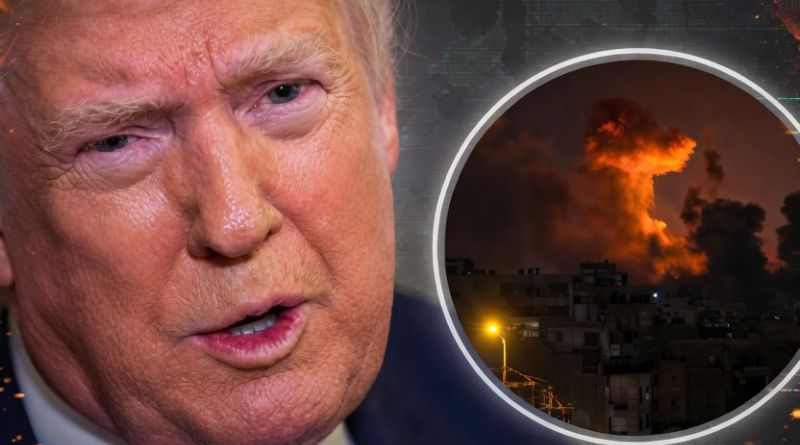
This week, former President Donald Trump delivered a characteristically bold two-word declaration: “regime change.” Speaking with his signature confidence, Trump asserted that U.S. actions had fundamentally altered Iran’s leadership and trajectory, sending ripples across Washington, Tehran, and global capitals. The statement, delivered amid high-stakes geopolitical tensions, quickly dominated headlines and reignited debates about the limits of military pressure and the challenges of reshaping authoritarian regimes. Yet, as with many conflicts in the Middle East, the on-the-ground reality remains far more complex than any single declaration suggests.
The Islamic Republic has not collapsed. Following the killing of Supreme Leader Ayatollah Ali Khamenei in late February 2026 during escalated U.S.-Israeli strikes, Iran’s power structure adapted with notable speed. The Assembly of Experts swiftly elevated Mojtaba Khamenei, the late leader’s son, to the position of Supreme Leader. Though Mojtaba himself was reportedly injured in the strikes and lost family members, the transition signaled continuity rather than disintegration. The Islamic Revolutionary Guard Corps (IRGC), clerical networks, and state institutions have undergone internal reshuffling but remain operational, projecting resilience to both domestic audiences and external adversaries.
This reorganization represents a critical pivot. Instead of a clean break, key hardline figures have been repositioned, and the regime has prioritized internal cohesion. The expected power vacuum never fully materialized into chaos. While significant damage has been inflicted on Iran’s military capabilities, nuclear program infrastructure, and command hierarchy, the theocratic system—built over decades with layered redundancies—has demonstrated durability. What Trump described as decisive regime change appears, at this stage, more like a severe decapitation and degradation of the old guard than a total overthrow.
The conflict continues to exact a heavy toll. Military operations, proxy skirmishes, and disruptions in the Strait of Hormuz have kept tensions elevated. Civilian populations on multiple sides bear the brunt through loss of life, economic hardship, and uncertainty. Oil and gas prices have spiked, transmitting pain to consumers worldwide and particularly to American households as the U.S. approaches midterm elections. These domestic pressures are compounding for the Trump administration, forcing a balance between maintaining leverage and avoiding prolonged entanglement.
Even traditional Gulf partners, initially supportive of a hard line against Tehran’s nuclear ambitions and regional proxies, are showing signs of caution. The prospect of an open-ended conflict threatens energy market stability and their own security calculations. In this climate, unexpected diplomatic channels have opened. Pakistan, with backing from players including Egypt and Turkey, has quietly pursued mediation efforts aimed at securing a face-saving off-ramp for all parties. These initiatives reflect a growing consensus that sustained military pressure alone may not deliver a stable endpoint without parallel political engagement.
International allies are voicing similar concerns. Australian Prime Minister Anthony Albanese has publicly called for clarity on Washington’s long-term strategy while reaffirming opposition to a nuclear-armed Iran and criticism of the former regime’s repression. His warnings about the risks of externally imposed change echo broader anxieties in allied capitals: that premature victory rhetoric could mask the difficulties of achieving lasting stability. The fear is that without a coherent plan accounting for human and economic costs, the region risks deeper fragmentation.
Trump’s declaration has polarized discourse sharply. Supporters view it as a overdue reckoning with a dangerous adversary, fulfilling promises to confront Iran’s nuclear program and destabilizing activities. They interpret the leadership transition as evidence of weakness and a potential prelude to further erosion of the regime’s authority. Critics, conversely, argue the claim oversimplifies a deeply entrenched system. They worry it risks drawing the United States into another protracted conflict without clear exit criteria, underestimating the social, ideological, and institutional pillars that have sustained the Islamic Republic.
The streets of Tehran reflect this tension—marked by hardship and surveillance, yet absent the widespread uprising some anticipated. Diplomats in quiet backchannels continue searching for formulas that could de-escalate without rewarding aggression. Iran’s restructured leadership, centered on Mojtaba Khamenei and reinforced IRGC elements, appears geared for prolonged resistance even as it seeks sanctions relief and breathing room.
Ultimately, the story of this chapter in U.S.-Iran relations will likely hinge less on declarative statements than on the grind of negotiation, economic realities, and internal Iranian dynamics. Two-word assertions capture attention and project strength, but they rarely resolve the intricate power balances of the Middle East. The human cost continues to mount, oil prices serve as daily reminders of interconnected risks, and the window for pragmatic compromise narrows with each escalation.
As the situation evolves, the central question persists: Can sustained pressure combined with targeted diplomacy produce a more stable outcome, or will the pursuit of maximalist goals simply usher in a more dangerous phase of uncertainty? The coming months will test whether rhetoric can align with results, or whether the region’s resilient realities will once again reshape expectations. A workable path forward demands clear-eyed assessment of both achievements and limitations—beyond slogans, grounded in the difficult work of statecraft.