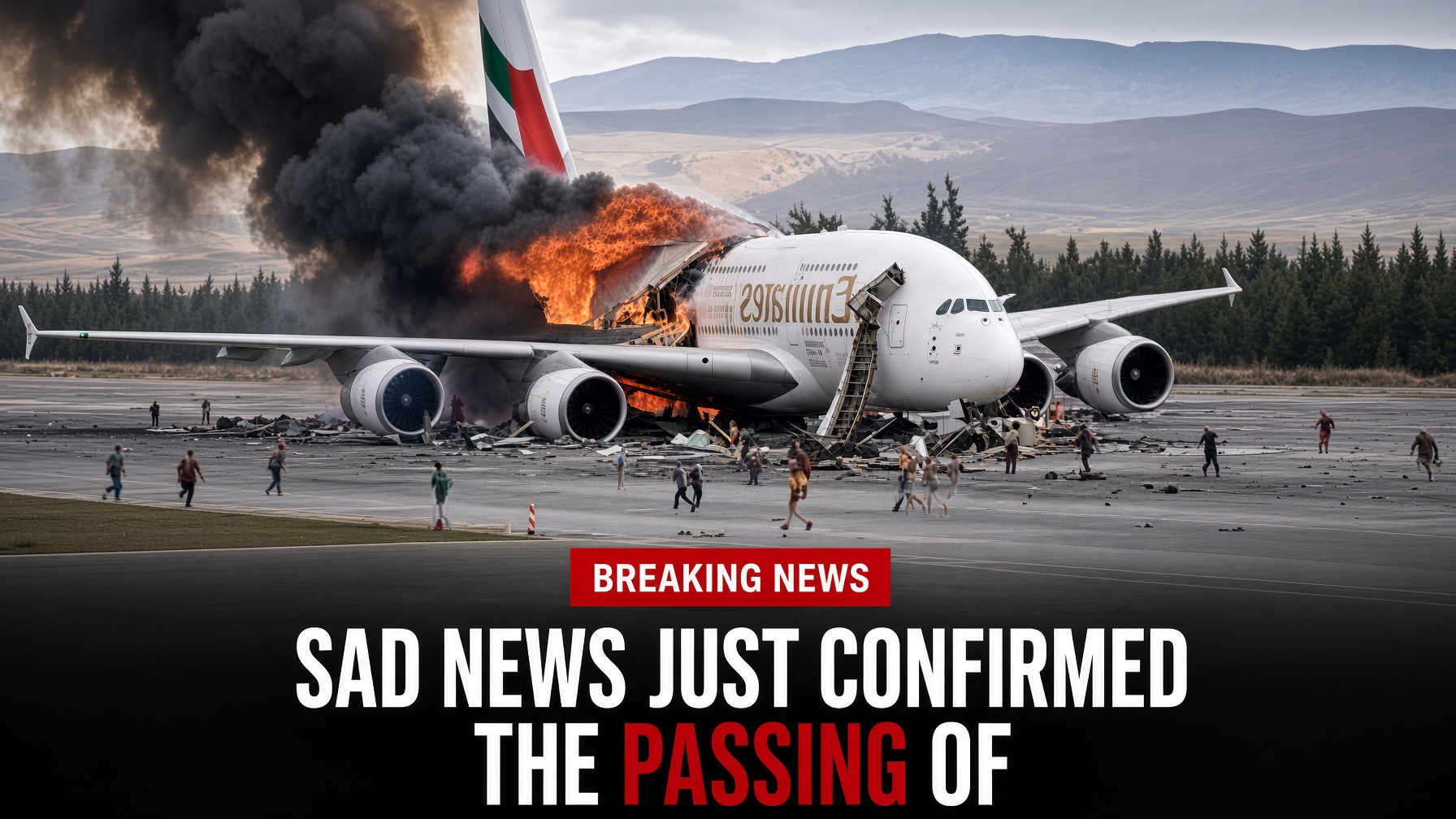
A Routine Flight Turns Into a Crisis
What began as a scheduled midday arrival from Thiruvananthapuram, India, became one of the most closely watched aviation incidents of 2016. On Wednesday, 3 August, Emirates Flight EK521, a Boeing 777-300 registered A6-EMW, approached Dubai International Airport with 282 passengers and 18 crew on board. The weather was typical for a Dubai August afternoon: high heat, a reported wind-shear warning on the ATIS, and a tailwind component on the active runway. Few of the people in the cabin had any reason to expect that the next few minutes would empty the aircraft onto the tarmac and leave the jet a burning wreck.
The flight itself had been uneventful. The captain, flying from the left seat, and the first officer as pilot monitoring received the usual terminal information as they descended. Controllers cleared the aircraft to land on runway 12L. What followed was not a conventional landing. The airplane floated well beyond the intended touchdown zone. The right main gear kissed the runway about 1,100 meters from the threshold; the left gear followed three seconds later. The nose stayed up. A “long landing” call sounded in the cockpit. The crew elected to go around.
That decision set the accident in motion. The takeoff/go-around (TO/GA) switches on a Boeing 777 are inhibited once weight-on-wheels logic is satisfied. The autothrottle therefore did not advance the thrust levers. For most of the attempted climb, both engines remained at idle. The airplane briefly left the surface, then settled back onto the runway, sliding on its lower fuselage for roughly 800 meters before coming to rest near taxiway Mike 13. Fuel ignited. Fire spread quickly along the airframe.
Evacuation amid fire and chaos
Inside the cabin the sequence was measured in seconds, not minutes. Smoke entered through the floor and vents. Cabin crew opened usable exits and inflated slides. Wind blew some slides against the fuselage, rendering them unusable; others worked as designed. Passengers left bags, phones, and shoes behind and went down the chutes. One slide at the forward left door later deflated after several people had already used it. Within a few minutes every occupant was off the airplane. Airport rescue and firefighting vehicles reached the wreck in about a minute and began laying foam.
All 300 people who had boarded in India survived the impact and the fire. Injuries were real but limited: roughly two dozen passengers and several crew members received minor injuries; a handful of cabin crew suffered more serious harm, including back injuries and smoke inhalation. Ten people were taken to hospital; none of the injuries among passengers and crew proved fatal. The aircraft itself was destroyed. It was Emirates’ first hull loss.
A firefighter’s sacrifice
The only death that day occurred on the ground. About nine to ten minutes after the airplane stopped, the center wing fuel tank exploded. A large section of the right wing’s upper skin was blown off and struck firefighter Jassim Issa Mohammed Hassan (also reported as Jassim Eissa al-Baloushi), a Ras Al Khaimah resident serving with airport civil defence. He died at the scene. Other firefighters and police officers were injured, some by heat in the 48 °C air. Officials later described his death as an act of duty during the rescue. Sheikh Mohammed bin Rashid Al Maktoum publicly praised the sacrifice. Emirates and the General Civil Aviation Authority issued condolences.
The airport closed for several hours. Flights diverted. Images of the burning 777 circulated worldwide within minutes. For a carrier that had never written off an airplane, the pictures were a shock.
What the investigation found
Early public speculation mentioned landing-gear trouble and wind shear. The official inquiry, completed by the UAE’s Air Accident Investigation Sector and released in 2020, was more precise. Wind conditions did matter. A shift from tailwind toward headwind, combined with thermal updrafts off the hot runway, contributed to a long flare and a late touchdown. Controllers had not passed on reports that earlier flights had encountered wind shear or had gone around. Those were contributing factors, not the decisive ones.
The probable causes centered on the go-around itself. After the brief touchdown, the crew believed the airplane was still airborne and expected the autothrottle to spool the engines when the TO/GA switch was pressed. Because the gear had already compressed, the switch was inhibited. Thrust stayed at idle until the last few seconds before the second impact. The crew did not effectively monitor engine instruments or manually advance the thrust levers in time. Investigators also noted limited training for go-arounds initiated from very low height, close to the runway, and a high degree of reliance on automation in a situation that no longer matched the automation’s logic.
There was no confirmed mechanical failure of the landing gear that caused the accident, contrary to some passenger recollections that circulated in the first hours. The gear had touched, then been selected up during the attempted climb. The fire that followed was a consequence of the hard contact, the slide along the runway, and the subsequent fuel-tank explosion.
Crew, passengers, and the aftermath
Cabin crew, many of them young and of mixed nationalities, performed the evacuation under smoke and heat. Passengers later described shouted commands, the rush toward light at the doors, and the odd quiet that followed once they stood on the tarmac watching the jet burn. One recurring image in survivor accounts is a parent holding a child on the slide. Another is the sudden realization, once clear of the airplane, that everyone who had been inside was still alive.
Emirates expressed relief that no passenger or crew member had died and offered support to those injured and to the firefighter’s family. The airline and the airport implemented changes recommended by the investigation: enhanced go-around training from low altitude, better sharing of wind-shear reports by air traffic control, and reviews of how crews monitor automation when the airplane’s energy state is deteriorating. The wreckage was written off. Flight EK521 remains the carrier’s only hull-loss accident.
Lessons that outlast the headlines
Commercial aviation’s safety record is built on rare events examined in detail. EK521 showed how a combination of weather, a long landing, inhibited automation, and incomplete monitoring can turn a routine arrival into a runway impact in less than half a minute. It also showed how well-trained cabin crew and a fast airport fire service can empty a wide-body airplane before fire consumes it. The survival of everyone on board was not luck alone; it was the product of procedures practiced for exactly this kind of day.
The cost was still high. A firefighter died doing the work he was trained to do. An airplane was destroyed. Dozens of people carried physical and psychological injuries away from the runway. For the families of the survivors, the gratitude is permanent. For the industry, the report’s recommendations—clearer training for late go-arounds, less unexamined trust in automation near the ground, better weather information from the tower—remain the practical memorial to what happened at 12:38 local time on 3 August 2016.
The story of EK521 is therefore two stories at once: a failure of energy management in the last seconds of flight, and a successful evacuation that kept a potential catastrophe from becoming a mass-casualty event. Both parts are worth remembering.