When a Quiet Easter Weekend Became a Viral Health Scare
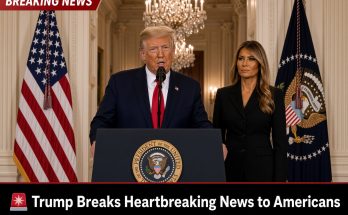
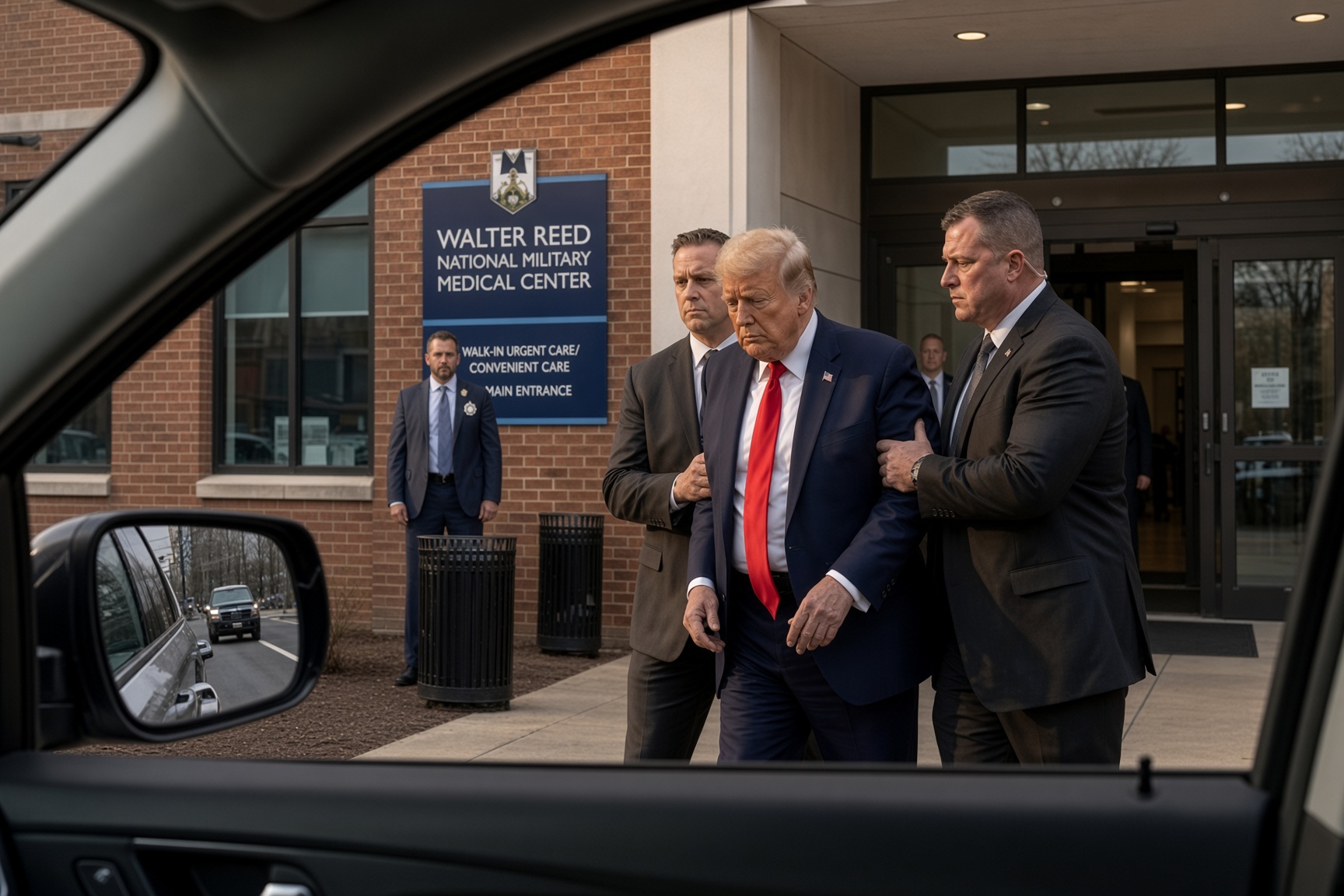
In a digital environment that rarely pauses, even a few hours without a public appearance by a high-profile leader can ignite a storm of speculation. That pattern returned over Easter weekend in April 2026, when President Donald Trump’s reduced public schedule collided with social media rumor, recycled footage, and an AI-generated image. Claims that he had been taken to Walter Reed National Military Medical Center spread quickly. They were not supported by official confirmation, photographs of a hospital visit, or statements from the medical center. They were, however, widely believed long enough to dominate searches and conversations.
This article recounts what actually happened, how the rumor formed, what officials said, how earlier health disclosures factored into public reaction, and what the episode reveals about information, visibility, and trust.
How the rumor took off
The spark was not a medical bulletin. It was a gap in visibility. Trump made no public appearances from April 2 through April 5. On Saturday, April 4, the White House called a press “lid” at 11:08 a.m. Eastern time—an ordinary scheduling signal that no further public events or press opportunities were planned for the rest of the day. Combined with his decision to remain in Washington for Easter rather than travel to Mar-a-Lago, the lid left a vacuum that online users immediately tried to fill.
Early posts on Bluesky and Threads claimed roads near Walter Reed were blocked. By midday, those claims were amplified on X. Search interest in phrases such as “Trump Walter Reed” and “Trump hospital” surged; one report put related Google searches above 500,000. Monitoring data later showed “Trump” and “Walter Reed” mentioned together more than 112,000 times across major platforms from late March through April 6, with more than a million engagements.
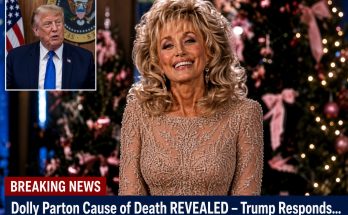
Much of the “evidence” did not hold up. A circulating motorcade video was old footage, including material tied to Trump’s 2024 shooting aftermath rather than April 2026. An image presented as current hospital context was generated by artificial intelligence. Local authorities did not corroborate weekend road closures at the hospital; some nearby restrictions were instead associated with cherry blossom festival traffic. Naval Support Activity Bethesda, which hosts Walter Reed, issued no special weekend gate alerts.
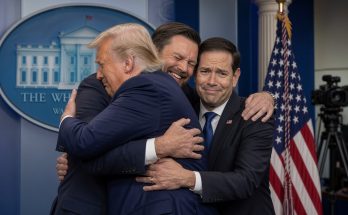
The rumor also ignored contrary signals. A Marine sentry at a West Wing entrance on April 4 was consistent with the president being at the White House. Trump continued posting on Truth Social. On April 5 he was photographed at Trump National Golf Club. On April 6 he appeared at the White House Easter Egg Roll and spoke with reporters. Those later images did not erase the earlier wave of speculation; they arrived after the story had already traveled.
What officials said
The White House rejected the hospitalization claim the same day it peaked. Communications director Steven Cheung wrote that Trump had been “working nonstop in the White House and Oval Office” over Easter weekend. The Rapid Response 47 account dismissed the posts as conspiracy theories built on a short stretch without press access. Administration officials also said the president was focused on operational matters that weekend, including efforts related to an Air Force officer whose aircraft had been shot down by Iran. There was no official statement that Trump had been admitted to Walter Reed, and no independently verified reporting established such a visit.
Fact-checkers at outlets including PolitiFact, Snopes, PBS News, and Poynter reached the same core conclusion: there was no evidence of illness or hospitalization over that weekend. The story was a case of absence interpreted as emergency.
Why health rumors attach so easily
Public curiosity about a president’s health is not new. Age, workload, and the stakes of the office make medical questions politically charged. Trump, 79 at the time of the Easter rumors, had already been the subject of intense scrutiny after the White House disclosed in July 2025 that he had chronic venous insufficiency (CVI). Physicians described CVI as a common, typically benign condition in older adults in which vein valves in the legs work poorly, allowing blood to pool and causing swelling. White House physician Capt. Sean Barbabella said evaluations found no deep vein thrombosis, no arterial disease, and no signs of heart failure, kidney impairment, or systemic illness. He described the president as remaining in excellent overall health. Bruising on a hand was attributed to frequent handshakes and aspirin use, not to CVI.
That earlier disclosure mattered in April 2026 not because officials tied CVI to the Easter schedule, but because it had already trained audiences to look for signs of decline. Photos of discoloration or swelling, some from months earlier, were recirculated as if they were new proof. In other words, a known, managed condition became a ready-made frame for an unrelated scheduling lull.
Schedule changes attract attention for a simpler reason as well. Presidents live on public calendars. A lid, a canceled trip, or a stretch without cameras is treated as a data point. When the figure is polarizing, observers fill the gap with the explanation that best matches their hopes or fears. Supporters may assume private work. Critics may assume concealment. Neither instinct is a substitute for evidence.
Social media’s role
The Easter rumor followed a familiar amplification path. Algorithms reward posts that provoke strong emotion. A claim that a sitting president is in a military hospital is high-emotion content whether or not it is true. Users then add “proof”: a road photo, a siren video, a cropped image of a hand, a caption that treats speculation as breaking news. Each share lowers the barrier for the next share. By the time official denials arrive, the first narrative has already set the terms of the conversation.
This is not unique to one president or one platform. Similar cycles have attached to other leaders whenever visibility drops. What is newer is the mix of tools: old video stripped of date context, AI images that look plausible at a glance, and fragmented platforms where corrections do not travel as far as the original claim. Fact-checking organizations and established newsrooms did push back, often by waiting for confirmation rather than matching the rumor’s speed. That restraint is responsible journalism. It is also slower than a viral post.
What the episode leaves behind
Several practical lessons follow.
First, a press lid is a communications device, not a diagnosis. It means no more public events that day. It does not mean a motorcade to Bethesda.
Second, health claims about public figures deserve a higher evidence bar, not a lower one. They can alarm families, markets, and political opponents. They can also be used as weapons. Either way, recycled video and generated images are not medical records.
Third, official silence for a few hours is not proof of concealment, but opaque communication does invite rumor. When a president is older and already the subject of medical disclosure, even routine “executive time” benefits from faster, clearer public explanation.
Fourth, audiences have a role. Waiting for primary sources—White House statements, pool reports, contemporaneous photographs, hospital or local-authority confirmation—reduces the reach of false alarms. Sharing an unverified “BREAKING” post does the opposite.
As of the official record from that weekend, there was no confirmed hospitalization and no declared medical emergency. Trump returned to public view within days. The more lasting story is not a secret trip to Walter Reed. It is how quickly a schedule change, a hospital’s familiar name, an old diagnosis, and a set of misleading visuals can combine into a national rumor—and how hard it is to unwind once the first wave has passed.
In that sense the April 2026 episode is less a health mystery than a media case study. Visibility gaps will keep happening. Platforms will keep rewarding intensity. The only reliable counterweight is the habit of asking, before amplifying: What is confirmed, what is inferred, and what is only circulating because it feels like news?