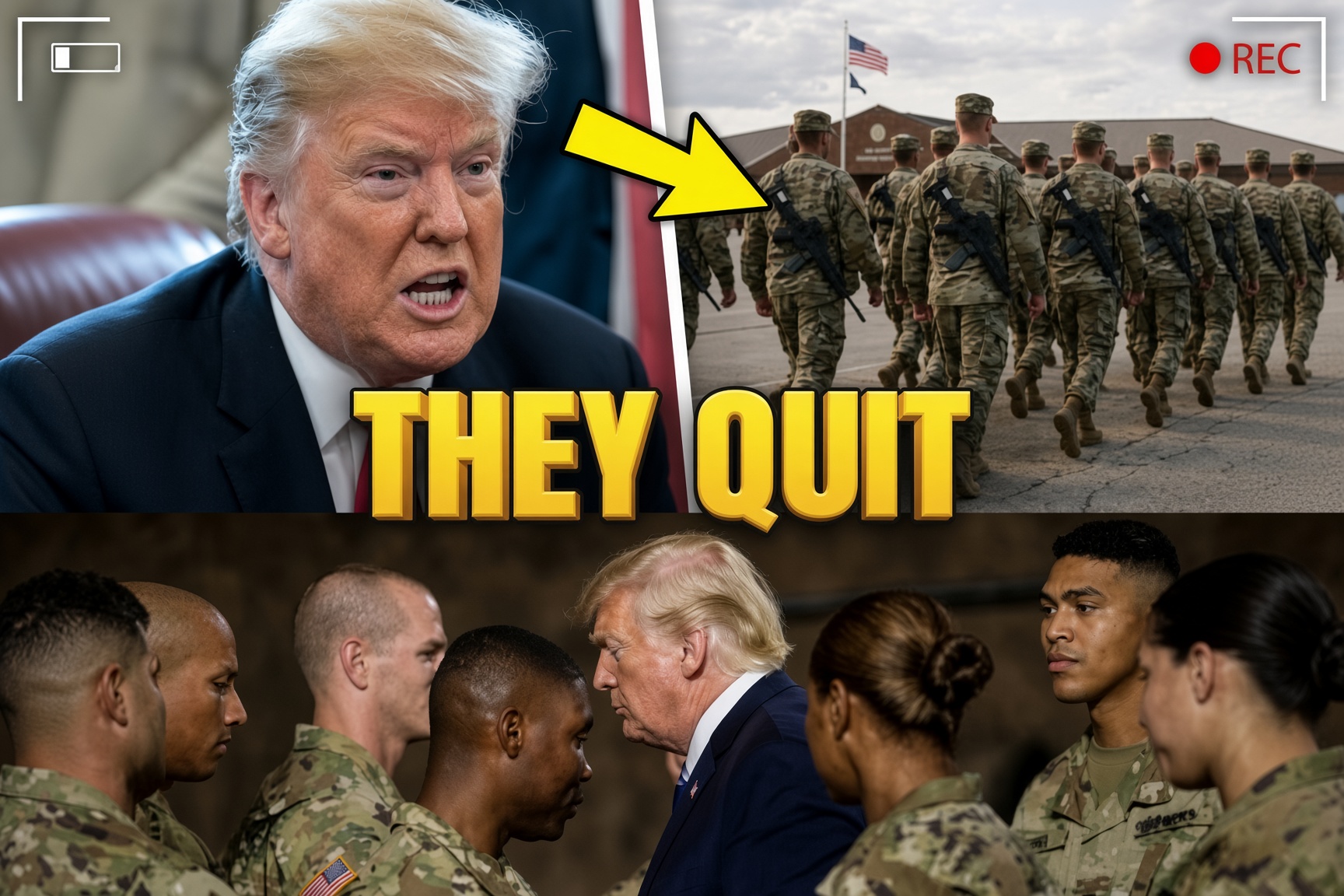
Rumors of internal strain in the U.S. military have circulated amid the ongoing war with Iran, though official confirmation of widespread refusal of orders remains lacking. Fact-checkers have found no verified evidence of service members openly defying deployment or combat orders en masse. What is documented is a sharp rise in applications for conscientious objector status. Organizations that assist troops report increases of several hundred percent since the conflict intensified, with some career officers and enlisted personnel citing moral and legal objections to operations they believe target civilian infrastructure.
President Donald Trump has repeatedly threatened to strike Iranian power plants and bridges, framing them as leverage if Tehran attacks shipping in the Strait of Hormuz. He has said the United States would destroy one such facility for each Iranian strike on vessels. The Pentagon has already hit bridges and other infrastructure that Iranian officials and some legal analysts describe as primarily civilian. Commanders have characterized certain targets as “dual-use,” arguing they serve both civilian and military functions and can therefore be lawful under the laws of armed conflict if proportionality and distinction requirements are met. Critics, including legal scholars and humanitarian groups, warn that large-scale attacks on systems essential to civilian life risk violating international humanitarian law.
History offers caution. Destroying a country’s power grid or transportation network rarely produces the intended collapse of will; it more often fuels nationalist resistance and strengthens the targeted government’s domestic position. Analysts note that Tehran has shown little sign of backing down under military pressure, and threats against civilian infrastructure tend to harden rather than soften hardline factions.
In Washington the political reaction has been swift. Sen. Chris Van Hollen and other lawmakers have called the approach “reckless” and lacking a coherent strategy or clear endgame. Some members of Congress worry that rapid executive decisions are outrunning legislative oversight, including the constitutional requirement that Congress authorize major military action and control funding. Without a defined off-ramp, the conflict risks becoming a protracted drain on lives and resources.
Geopolitically the picture is similarly fraught. External pressure has historically reinforced rather than weakened Iranian leadership cohesion. Diplomats emphasize that back-channel talks remain essential; a single miscalculation could lock both sides into a longer, costlier confrontation. Perception matters as much as battlefield results: the image of the United States striking the systems that keep cities running can reshape alliances and public opinion across the region.
The central question is whether restraint and communication can still limit the damage, or whether the cycle of threats and strikes will deepen an already dangerous instability. Officials on all sides continue to insist they prefer a diplomatic path, even as the rhetoric and the targeting lists grow more expansive.