White House defends press-pool overhaul as a bid for broader access
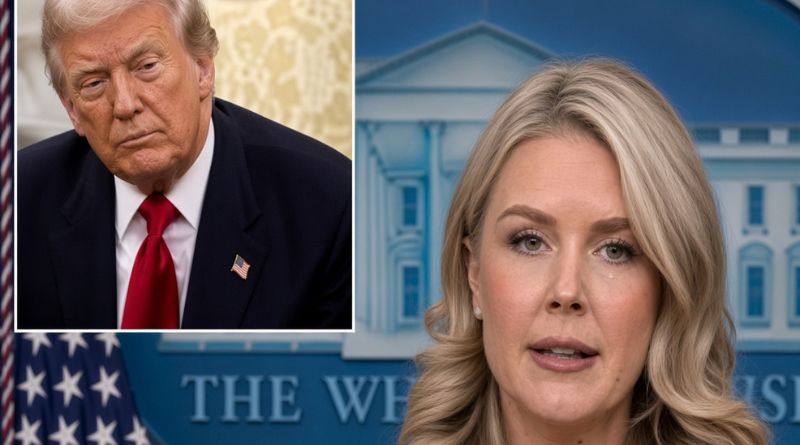
WASHINGTON — White House Press Secretary Karoline Leavitt has defended the Trump administration’s overhaul of presidential media access, saying the changes are meant to open limited press pools to more outlets rather than shut journalists out.
Speaking at an Axios event hosted by co-founder Mike Allen, Leavitt argued that thousands of organizations hold White House credentials, but only a handful of reporters can accompany the president into tight spaces such as the Oval Office, the East Room, or Air Force One. Those scarce seats, she said, should rotate among print, digital, and independent news organizations instead of remaining reserved for a small group of established outlets.
The administration has promoted greater access for what it calls “new media” — digital publishers, podcasters, and independent commentators — and has added a rotating seat in the White House briefing room for newer outlets that meet security and credentialing rules. Leavitt rejected claims that the policy has reduced overall press access, insisting the White House should not be required to lock in permanent spots for a handful of legacy organizations.
Critics, including the White House Correspondents’ Association, warn that greater government control over who sits in the pool could undermine independent coverage of the presidency.
Wire services and a long-standing arrangement
For decades, the Associated Press, Reuters, and Bloomberg have held regular places in presidential press pools. Their stories and photographs are distributed to thousands of newspapers, television stations, websites, and other outlets in the United States and abroad. The AP has argued that shrinking or excluding wire services does not affect only individual reporters; it affects every newsroom that relies on that shared coverage.
The dispute sharpened in 2025 after the White House restricted AP access following the organization’s decision to keep using “Gulf of Mexico” rather than the administration’s preferred “Gulf of America.” A federal court later ruled that the administration could not bar AP journalists from certain presidential events because of that editorial choice. The White House appealed, arguing that access to limited presidential spaces should remain under its control.
The WHCA has stressed that it does not issue White House credentials or control Secret Service security screening. Those powers belong to the Press Office and the Secret Service. The association does help organize pool logistics and represents journalists in access talks. Its concern is that if the government alone decides which outlets get regular seats, those decisions could tilt toward favored viewpoints.
Space is the constraint — and the argument
The fight is rooted in physical limits. Only a small number of journalists can enter certain rooms, travel with the president, or attend tightly controlled meetings. The administration says that scarcity makes rotation necessary and justifies including a wider mix of outlets. Traditional news organizations counter that wire services serve a public function: they deliver timely, widely shared accounts to outlets that cannot station their own reporters at the White House every day.
Leavitt also compared Trump’s media engagement with that of former President Joe Biden. Data cited by Axios in 2024, drawn from research by presidential scholar Martha Kumar, counted 164 press conferences and interviews for Biden by June 30 of his fourth year in office. The same analysis recorded 468 for Trump at a comparable point in his first term. Those figures measure formal press conferences and interviews, not every hallway exchange or social-media post, and they are only one measure of how a president deals with the press. Leavitt used them to argue that Trump has remained highly visible to reporters even as his team rewrites the rules for who gets into the smallest rooms.
A larger shift in political journalism
The controversy sits inside a broader change in how politics is covered. Newspapers and wire services now share the field with digital outlets, influencers, and independent creators. The White House says its policy simply reflects that landscape. The WHCA and major news organizations reply that broader participation is not the same as reliable, consistent, independent coverage — especially if the government picks the participants.
Leavitt framed the administration’s stance as fairness: limited space should not be treated as a hereditary privilege of a few brands. Opponents framed it as a power grab: once the White House decides who is in the pool, it can reward allies and punish critics without ever formally revoking credentials.
The legal fight over AP access remains part of that tension. The court ruling treated exclusion over an editorial naming choice as viewpoint discrimination in a limited public forum. The administration’s appeal treats pool seats as a privilege the executive may allocate as it sees fit. How that case is resolved will shape how much room future White Houses have to redesign press access.
For now, the briefing room still fills, pools still travel, and cameras still roll. What has changed is who decides the roster — and how often that roster turns over. The administration says the new mix gives more journalists a chance to cover the president up close. Traditional outlets say the public interest is served when the same independent wires can report every event and feed that reporting to everyone else.
Those two claims are not automatically compatible. Broader participation can coexist with wire-service continuity, or it can replace it. The policy as described by Leavitt leans toward rotation and new-media inclusion. The WHCA leans toward preserving a shared backbone of coverage that does not depend on any one administration’s preferences.
As the White House continues to revise its media-access practices, the practical question is the same one that has hung over presidential press relations for years: how to fit more voices into rooms that will not get larger, without letting the host choose which voices are heard. Leavitt says the answer is to open the door wider. Her critics say the answer is to keep the door from becoming a filter.