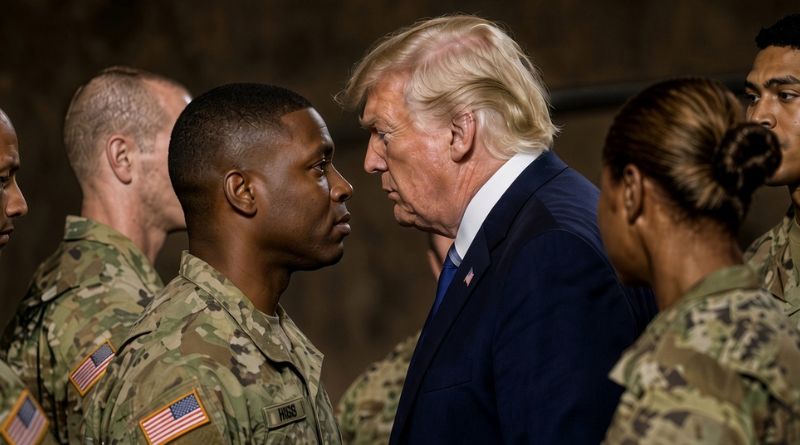
While official confirmation is still pending, reports that some U.S. service members have refused duty point to deep strain inside the American defense establishment. The claims have surfaced as rhetoric over Iran intensifies, driven in large part by statements from Donald Trump about possible strikes on civilian infrastructure.
Power facilities and bridges are among the targets under discussion. That kind of campaign would mark a sharp escalation, and it has already alarmed legal scholars and humanitarian groups. Experts warn that large-scale attacks on systems essential to civilian life may violate international law and the laws of armed conflict. Strategically, the idea is widely viewed as high-risk. Past wars suggest that wrecking a country’s infrastructure seldom produces the military outcome its authors expect. More often it hardens nationalist resistance, rallies domestic support for the targeted regime, and narrows the space for diplomacy later. Analysts fear a show of force could leave the United States facing a more unified adversary.
In Washington the political reaction has been swift. Senator Chris Van Hollen and other lawmakers have called the posture reckless and said it lacks a coherent strategic plan. Some in Congress also worry that executive decisions are moving faster than legislative oversight. The power to authorize military action is meant to be a check, but the speed of this crisis threatens to sidestep debate and funding limits, raising the chance of escalation that Congress has not approved.
Outside the United States, the stakes are larger still. Tehran has shown little sign of yielding under pressure. External threats have often strengthened hardliners inside the Iranian leadership, which makes de-escalation by military means alone unlikely. The absence of a clear exit strategy is a central objection. Without a defined endgame, the risk is a long conflict that consumes resources and lives and pulls other actors in.
Diplomats are now focused on keeping channels open. Reports indicate back-channel talks are under way in search of a way to step back. In a crisis this volatile, perception can matter as much as fact: one decision or miscalculation could redraw the security map of the region. The open question is whether restraint can still hold, or whether the Middle East is headed into a new period of instability.