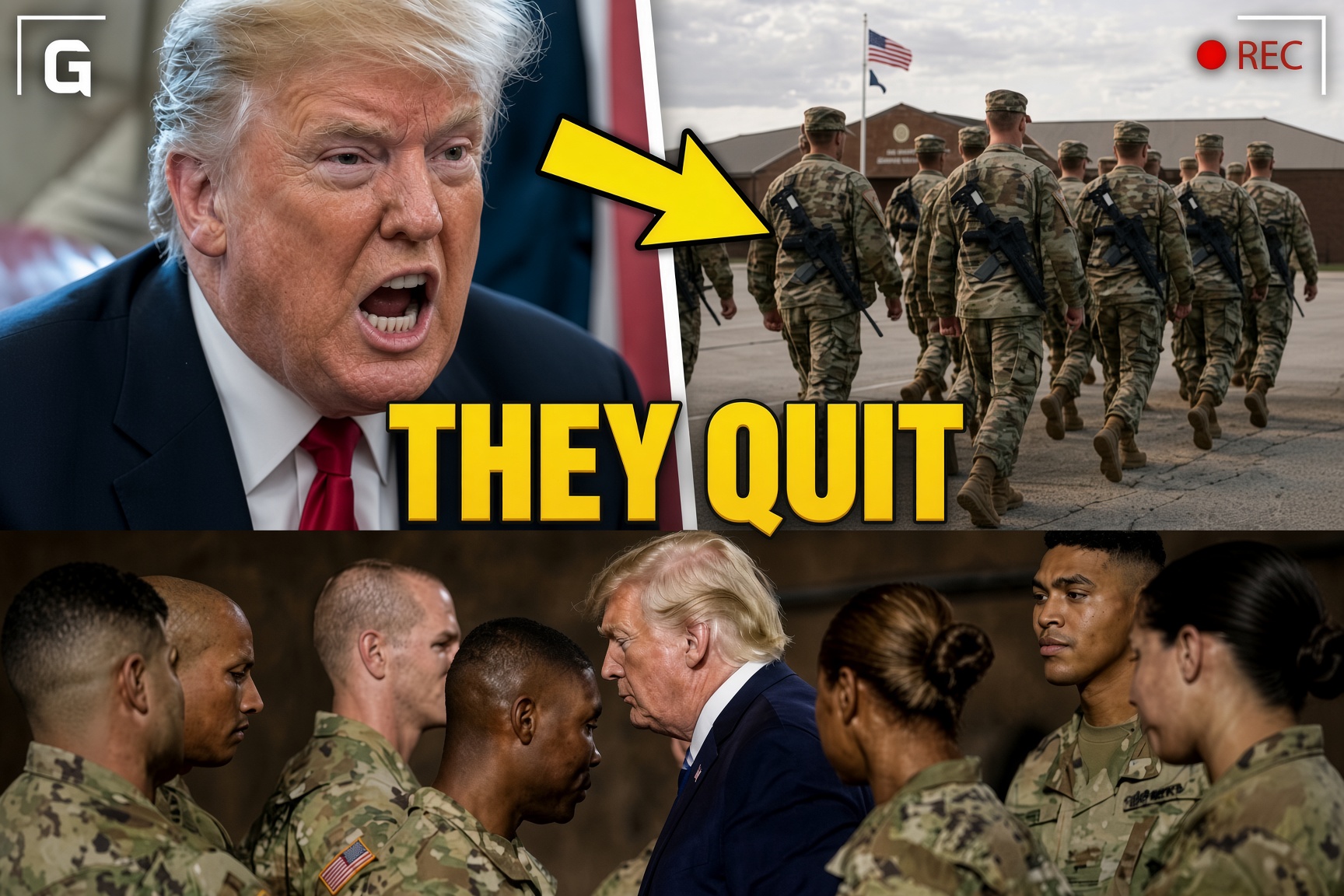
Reports that some U.S. service members may be declining certain duties, still awaiting official confirmation, suggest uncommon strain within the American defense establishment. The reports emerge against sharper public statements by Donald Trump about possible strikes on Iranian civilian infrastructure, including power plants and bridges.
Legal scholars and humanitarian organizations have cautioned that large-scale attacks on systems essential to civilian life risk violating international humanitarian law and the laws of armed conflict. Damage to electricity grids, transport links, and related networks typically harms ordinary populations before it constrains an adversary. Past campaigns of this kind have rarely produced the hoped-for political collapse. More often they have reinforced nationalist sentiment, strengthened a government’s claim to resistance, and narrowed the room for later diplomacy.
In Washington the response has been immediate. Senator Chris Van Hollen and other lawmakers have described the posture as reckless and without a coherent strategy. Some members of Congress worry that executive decisions are moving ahead of legislative oversight. The constitutional and statutory limits on the use of force—authorization, debate, and funding—exist for precisely those moments when events outpace deliberation. A crisis that bypasses those limits raises the chance of poorly bounded escalation.
Strategically the outlook is no clearer. Tehran has shown little readiness to yield under open threat. External pressure often consolidates hard-line factions and shrinks the space for de-escalation. Analysts also note the absence of a defined political objective or exit path. Without either, military action can settle into a prolonged contest that consumes resources and lives while producing no stable settlement.
The wider consequences would not remain bilateral. A campaign against civilian infrastructure would affect energy markets, regional alliances, and calculations among major powers. Perception can matter as much as the first strike; a single miscalculation could lock both sides into a cycle of retaliation that becomes difficult to reverse.
Diplomats therefore treat communication as the immediate priority. According to some accounts, back-channel contacts are already being used to test whether a pause remains possible. The open question is whether restraint and verification can still hold or whether the region will be drawn into deeper and more lasting instability.