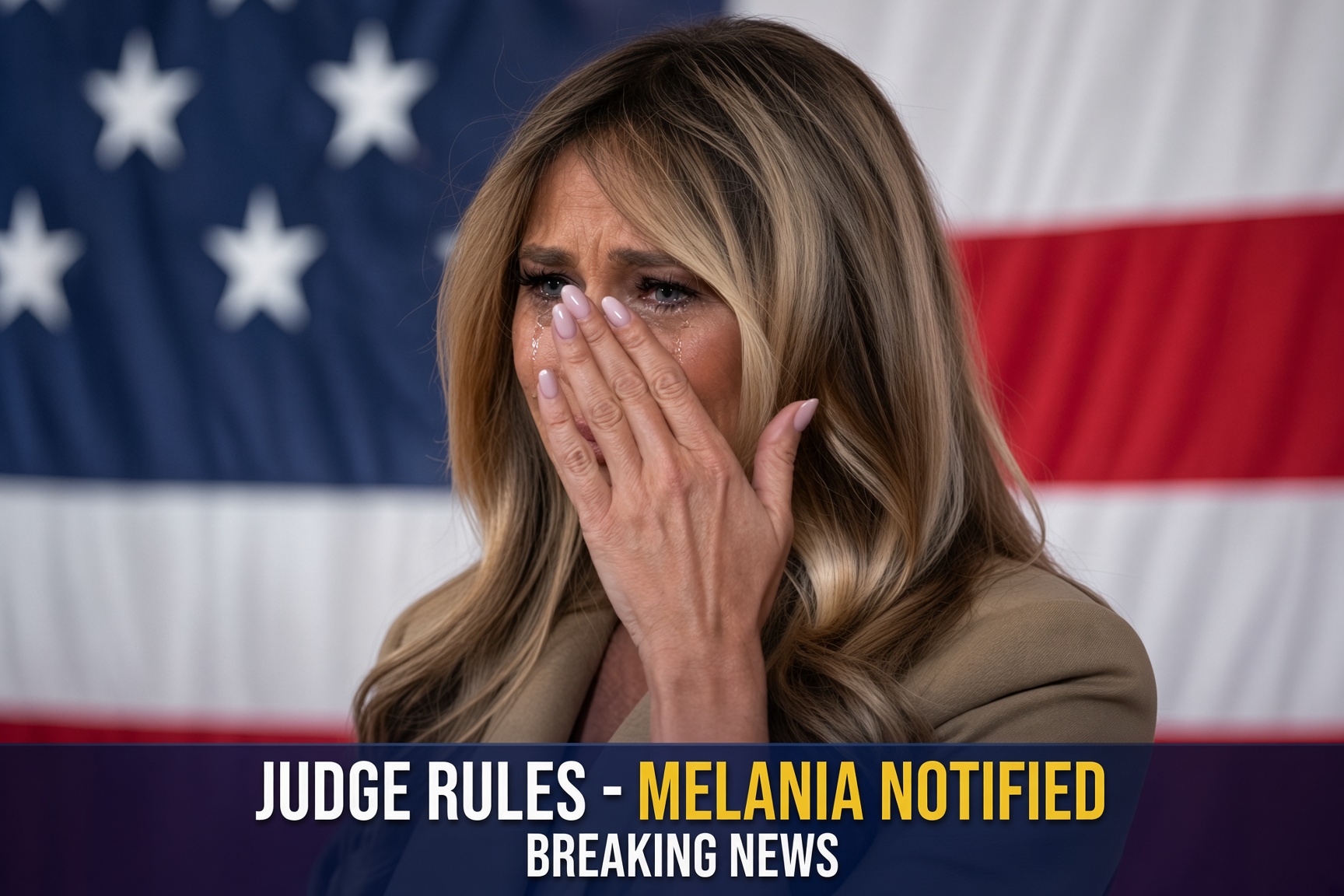
A federal judge in Manhattan has dismissed journalist Michael Wolff’s lawsuit against First Lady Melania Trump, rejecting what she described as a “contorted” attempt to preempt a threatened billion-dollar defamation case over comments linking her to Jeffrey Epstein.
U.S. District Judge Mary Kay Vyskocil, appointed by President Donald Trump, ruled that Wolff’s preemptive action was “not how the federal courts work.” In a 45-page opinion issued on May 22, 2026, she wrote that Wolff was effectively asking the court “for a declaration that, if the first lady sues him, he deserves to win.” That, she concluded, is not the proper role of the judiciary.
Vyskocil acknowledged that the parties have a “real dispute” but declined to reach the merits of the underlying claims. “It’s an inappropriate level of tactical gamesmanship,” she wrote. “The Court will not be conscripted to oversee an abusively presented spat.” Although the court possessed jurisdiction—because the parties are citizens of different states and a substantial sum is at stake—she declined to exercise it. She dismissed the case so that the dispute could “be litigated like any other.”
The conflict originated after Trump’s attorney, Alejandro Brito, sent Wolff a demand letter last year. The letter accused Wolff of statements that caused “overwhelming reputational and financial harm” and warned that Trump would have “no alternative” but to file suit if he refused to retract them. Wolff responded by filing first, in New York state court in October 2025, seeking a declaration that his remarks were not defamatory and that any suit by Trump would violate New York’s anti-SLAPP statute, which is designed to deter lawsuits intended to chill protected speech.
Brito removed the case to federal court and later moved to dismiss it or transfer it to Florida, where Trump has since pursued her own action. Vyskocil found that Wolff had won a “race to the courthouse” but had engaged in “textbook bad-faith forum shopping” by attempting to litigate New York defenses against a threatened Florida claim.
Wolff, the author of several books about Donald Trump, argued in his complaint that the president and first lady “have made a practice of threatening those who speak against them” with expensive litigation “to silence their speech, to intimidate their critics generally, and to extract unjustified payments.” He maintained that he never accused Melania Trump of criminal involvement with Epstein, who died in a Manhattan jail in 2019 while awaiting trial on federal child sex-trafficking charges.
The Daily Beast retracted an article last summer titled “Melania Trump ‘Very Involved’ in Epstein Scandal: Author,” which was based on an interview with Wolff, after receiving a letter from Brito. In that interview, Wolff described the first lady as “behind the scenes” in dealing with the White House response to the Epstein matter, not as a participant in any criminal activity.
Melania Trump has repeatedly denied any association with Epstein. “The lies linking me with the disgraceful Jeffrey Epstein need to end today,” she said at an April press conference. “The individuals lying about me are devoid of ethical standards, humility, and respect.” Following the ruling, a spokesperson said she “is proud to continue standing up to, and fighting against, those who spread malicious and defamatory falsehoods as they desperately try to get undeserved attention and money from their unlawful conduct.”
The first lady has also urged Congress to permit Epstein’s victims to testify under oath. “Now is the time for Congress to act,” she said. Republican Representative Nancy Mace praised her for standing with victims and supporting legislation addressing nonconsensual intimate images. Democratic Representative Robert Garcia said he agreed with her call for a public hearing and urged House Oversight Chairman James Comer to schedule one.
With the New York case now closed, the underlying dispute over Wolff’s statements remains for other courts to resolve. The ruling leaves the substantive questions of defamation and the application of anti-SLAPP protections to be addressed in the Florida action or any subsequent proceedings, rather than through a preemptive federal declaration sought in New York.