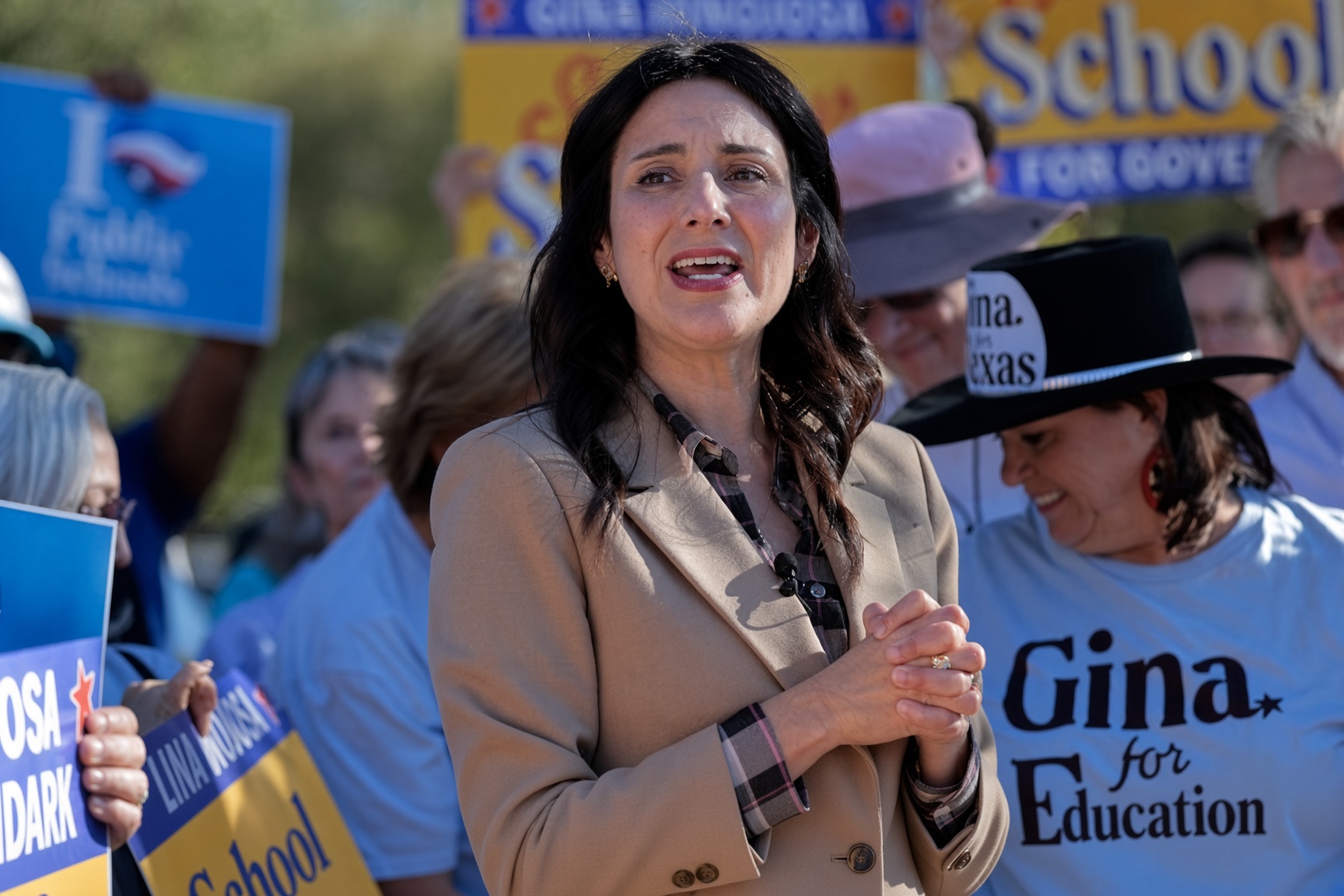
Texas Governor-elect Gina Hinojosa has not committed to preserving Republican Gov. Greg Abbott’s Operation Lone Star border-security program after defeating him on Tuesday.
Hinojosa, a Democratic state representative from Austin, ended a 36-year Democratic drought in the governor’s mansion. She will become Texas’ first Democratic governor since Ann Richards and the state’s first Latina governor. Her upset victory immediately raises questions about the future of Abbott’s signature border initiative, which turned Texas into one of the most aggressive state partners in immigration enforcement during the Biden administration.
Operation Lone Star has cost Texas more than $11 billion since Abbott launched it in 2021. The program has funded sections of state-built border barrier, the deployment of more than 10,000 National Guard members, and extensive Texas Department of Public Safety operations along the Rio Grande. Abbott framed the effort as a response to what he called a federal failure to secure the border, using executive authority to declare a disaster and mobilize state resources repeatedly.
Hinojosa has long criticized the program. She voted against its initial funding and has described large portions of the spending as ineffective. “As governor, I’ll put in the work to secure the border, not waste working Texans’ money on political theater,” she has said. In recent interviews she has declined to name specific line items she would eliminate. Instead she has argued that billions were spent prosecuting migrants for trespassing while the state simultaneously paid for their legal representation. “Public safety shouldn’t be a political stunt,” she said. “I will spend the money it takes to keep our community safe, not for political theater.”
Those statements leave open the possibility that some elements of Operation Lone Star could continue under a different structure while others are scaled back or redirected. Hinojosa has been explicit in opposing further barrier construction in the Big Bend region, contending that physical walls are unnecessary there. She has also sharply criticized certain Immigration and Customs Enforcement practices and Texas cooperation with federal operations that she said harmed families while benefiting political donors. She previously accused Abbott of turning the state into a “staging ground” for enforcement actions.
At the same time, Hinojosa has acknowledged that Trump administration policies have substantially reduced illegal crossings. She has credited the drop in encounters for easing pressure on Texas compared with the record levels seen under Biden. She has argued that closer cooperation with Mexico and federal authorities can achieve better results than some of Abbott’s purely state-directed measures. She has cited an earlier international bridge closure in which she contacted federal officials who then negotiated with Mexican counterparts.
The changed conditions at the border give Hinojosa more room to reassess the program. Illegal crossings have fallen sharply under Trump, reducing the sense of emergency that justified large-scale state deployments in 2021–2024. Her election could also alter Texas’ relationship with the Trump administration on immigration. Abbott had positioned the state as a leading Republican partner, deploying personnel, installing razor wire, constructing barriers, and busing migrants to Democratic-led cities. Hinojosa’s administration is expected to be less willing to provide the same level of state support for federal enforcement. That shift matters because Texas shares roughly 1,250 miles of border with Mexico—more than any other state.
Hinojosa’s broader campaign emphasized affordability, public education, and opposition to what she called excessive corporate influence. She has proposed one-time $1,500 payments to households drawn from Texas’ large budget reserves and has pushed for Medicaid expansion. Immigration policy, however, is likely to produce some of her earliest and most consequential decisions after she takes office in January.
Republicans retain control of the Texas Senate, which will constrain parts of her agenda and force negotiations over future border appropriations. Operation Lone Star’s ultimate shape will depend on those budget battles as well as the executive choices Hinojosa makes once she succeeds Abbott. For now, the governor-elect has signaled a preference for results over theater while stopping short of a full dismantling pledge.