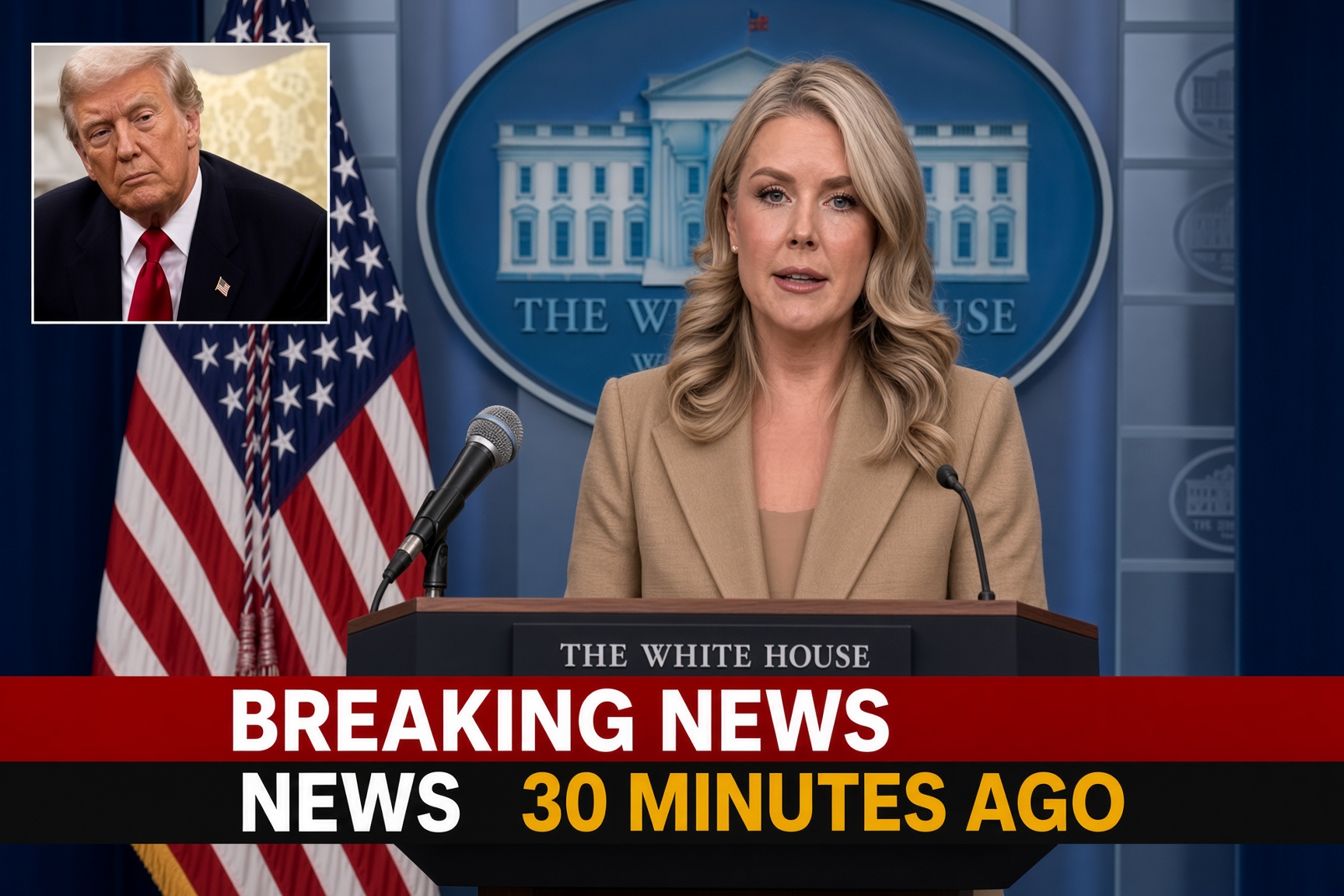
White House Press Secretary Karoline Leavitt has framed the Trump administration’s changes to presidential press access as an effort to broaden participation rather than limit it. In a conversation with Axios co-founder Mike Allen, Leavitt said the goal is to bring more organizations into the small press pools that accompany President Donald Trump into tight spaces such as the Oval Office, the East Room, and Air Force One. Established news organizations and the White House Correspondents’ Association (WHCA) have countered that shifting control of those seats to the government risks injecting politics into coverage of the presidency.
Thousands of organizations hold White House credentials. Far fewer reporters can travel with the president or stand in the room when he signs orders or answers questions. Leavitt has argued that those limited spots should rotate among print, digital, and independent outlets instead of remaining reserved for a small group of long-established organizations. “I don’t view them as restrictions. We view them as opening access to more outlets, more voices, more news, journalists and outlets,” she told Allen. She has also questioned why any single outlet should hold a place in a roughly 13-person press pool every day, and she has said a small group of journalists on the WHCA board should not decide who enters the Oval Office or boards Air Force One.
The administration has taken concrete steps. In January 2025, Leavitt created a rotating “new media” seat in the briefing room for digital publishers, podcasters, influencers, and other applicants who meet Secret Service and credentialing standards. The White House reported receiving more than 11,000 applications. The seat has been occupied by a range of voices, from Axios and Semafor to Breitbart, podcast hosts, and YouTube personalities. It has frequently received the first question, a role long associated with the Associated Press.
In February 2025, Leavitt announced that the White House press team—not the WHCA—would determine the daily makeup of the pool. Legacy television networks would keep rotating seats, she said, but “well-deserving outlets who have never been allowed to share in this awesome responsibility” would be added. The WHCA had handled pool logistics, in coordination with the White House, since the 1950s.
Tensions grew sharpest over the wire services. For decades, the Associated Press, Reuters, and Bloomberg held regular places in the pool. Their copy and photographs supply newspapers, broadcasters, and websites that cannot station a full-time staff at the White House. That arrangement frayed after the AP declined to adopt the administration’s preferred name “Gulf of America” for the Gulf of Mexico. The White House barred AP reporters from some events. A federal court later ruled that the AP could not be treated worse than peer wire services because of an editorial decision. The administration appealed, contending that access to limited presidential spaces remains a White House prerogative.
In April 2025, rather than restore a dedicated daily wire slot, the White House placed the three wires into a larger print rotation competing for two seats. Officials said the change put similarly situated outlets on an “equal playing field.” The AP, Reuters, and Bloomberg said the result was less consistent, real-time coverage for the many newsrooms that depend on them. Bloomberg Editor-in-Chief John Micklethwait described the loss of a permanent wire presence as a reduction in “scrutiny and accountability.”
The WHCA has emphasized that it does not issue credentials or control Secret Service clearance; those authorities rest with the Press Office and the Secret Service. The association organizes pool rotations and negotiates over access. After the White House assumed control of the pool list, then-WHCA president Eugene Daniels said the move “suggests the government will choose the journalists who cover the president. In a free country, leaders must not be able to choose their own press corps.”
Physical space remains the practical center of the dispute. A full press corps cannot fit in the Oval Office or on every presidential trip. The administration maintains that rotation is the only fair approach and that the media landscape has changed: digital outlets and independent commentators now reach audiences that newspapers once dominated. Critics respond that wire services perform a public function the rotation does not replace, and that day-to-day White House discretion over who stands in the room invites choices based on viewpoint even if officials deny that intent.
Leavitt has drawn a contrast between Trump’s media habits and those of former President Joe Biden. Research by presidential scholar Martha Joynt Kumar, cited by Axios, has long shown Trump giving far more interviews and informal question-and-answer sessions than Biden at comparable points. Those counts include formal conferences and interviews rather than every shouted exchange; they measure visibility, not how pool seats are assigned. Leavitt has used the comparison to argue that Trump speaks to reporters often while changing who receives the limited seats.
Additional restrictions, including appointment-only access to the press secretary’s West Wing offices after officials accused some reporters of eavesdropping or recording without permission, reinforced the sense that the relationship had been rewritten. Leavitt left the press secretary’s job in late August 2026. Vice President JD Vance has said one of her legacies was opening the briefing room to “non-legacy” media and that the administration intends to continue that approach.
The core question remains unchanged. Thousands of credentialed journalists seek access. Only a few can stand in the smallest rooms. The White House says it is spreading that privilege. The WHCA and the major wires say independent coverage of the president depends on a system the government does not run. How those claims are weighed will shape what the public sees of the presidency—and who is present when it happens.