The most analyzed political statement of the week was delivered without a word. In a capital city defined by round-the-clock noise, partisan combat, and the churn of the 24-hour cycle, President Donald J. Trump brought a crowded Washington auditorium to a standstill on Thursday afternoon. He did not do it with a slogan, an attack, or a recitation of accomplishments. He did it by stopping.
For several long seconds he said nothing at all. The pause was brief. The reaction was not. Within hours the silence had escaped the room, accumulated tens of millions of views, and set off a familiar argument about what, exactly, modern political communication is for.
The room had assembled for something else. Lawmakers, foreign dignitaries, and the national press filled a Washington venue expecting the cadence that has defined Trump’s public life since 2015: volume, velocity, and an unfiltered willingness to take opponents apart in real time. That is the speech they came to cover. It is also the speech the cameras were already framed to capture.
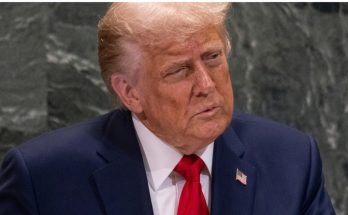
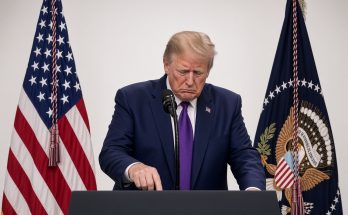
What they got, at least at the start, was stillness. Trump stepped to the lectern and halted. He swept his gaze across the hall with a measured, unblinking intensity and let the seconds accumulate. Witnesses described an immediate change in the room. The ordinary buzz thinned into an uneasy hush. The only steady sound was the synchronized clicking of camera shutters. In a city where public figures treat airtime as something never to be surrendered, the refusal to fill the moment forced every lens and every seat to lock onto the man at the podium.
The silence did not read, to those in the hall, as hesitation. It read as weight. Whether that weight was calculated is the question the country then spent two days arguing about.
The argument moved faster than the speech. Short clips isolating the pause spread across X and Truth Social almost as soon as the address ended. The interpretations split along the lines the country already occupies.
Allies and conservative commentators treated the moment as a portrait of stoic command. In a period of economic strain and heightened tension abroad, they cast the stillness as a seasoned leader absorbing the gravity of the office, a calm contrast to the frantic warfare around him. Opponents and progressive analysts reached for a smaller explanation: a routine breath, a theatrical beat designed to manufacture a controversy out of nothing, or simply a man gathering his thoughts. Both readings circulated as if they were reports from the same event. In a sense they were. A five-second pause has no transcript. It cannot be fact-checked in the ordinary way. It can only be filled.
That is why it traveled. Spoken lines are clipped, quoted, rebutted, and forgotten by the next segment. An empty interval is an open canvas. Audiences rush to supply what the speaker withholds, and they supply it from their own expectations. Public relations specialists and rhetorical scholars have long described silence as one of the harder instruments in political speech, precisely because it cannot be answered on its own terms. Trump’s pause put that principle on television. By refusing to begin on the room’s schedule, he made the press corps wait on his. In a media environment saturated with constant noise, the sudden absence of sound disrupted the rhythm more effectively than another raised voice would have.
The contrast with the usual Washington method was part of the point, whether or not it was intended as one. Conventional political training treats dead air as a failure. Candidates are drilled to stay on the teleprompter, to bridge every gap, to avoid the awkward second in which a viewer might change the channel or a reporter might invent a meaning. Trump has spent a decade ignoring that training. After the pause he moved directly into the familiar pillars of his America First agenda: economic policy, deregulation, judicial appointments. He did not acknowledge the silence. He did not explain it.
The White House followed the same course. No formal statement, no defensive clarification, no aide dispatched to translate the gesture into a talking point. The pause was left to stand as self-explanatory, which meant the explanatory work fell to everyone else. Cable panels, editorial boards, and social feeds spent the next cycle consuming the moment and producing theories about it. The coverage itself became the evidence cited by his allies: the political apparatus was still reacting to him, rather than the other way around.
None of this required the pause to be profound. It required only that it be noticed, and that the notice be contested. A leader who speaks constantly competes with every other voice in the cycle. A leader who stops, even briefly, creates a vacuum that other voices feel obliged to fill. The obligation is the leverage. Trump has used versions of it before, in rallies, in interviews, in the long stares that clip-makers already know how to cut. Thursday’s version was simply clean enough, and public enough, to dominate a news cycle that had been waiting for something to dominate it.
As that cycle moves on, the episode is less a revelation about policy than a reminder about attention. The boundary between governing, branding, and theatrical optics has been thin for years. It is thinner now. The pause may have been a fleeting private thought, an instinct for television, or nothing more than a breath held a second too long. The effect did not depend on settling that question. In a city that talks over itself as a matter of professional habit, Trump showed again that undivided attention is sometimes won by declining, for a few weighted seconds, to say anything at all.